

Water And Ice Safety: read this before you go
Georgia became the fourth state on January 2, 1788. Here is its history in one place: 82 historic sites you can visit (12 free), 50 National Historic Landmarks, 46 historic tours and trails, 42 history events and a 60-event timeline, each checked against an official page.
Header photo: Fort Pulaski near Savannah after Union rifled cannon breached its walls in April 1862. Credit: Library of Congress, Prints & Photographs Division, LC-DIG-cwpb-00779.
- 17884th state (Jan 2, 1788)
- 82historic sites to visit
- 50National Historic Landmarks
- 46tours and trails
- Georgia history by era
- Historic sites by region
- Tours and trails
- History events
- Markers, archives, America 250
Georgia’s story runs from Ocmulgee, Etowah and Kolomoki mounds through Oglethorpe’s 1733 Savannah, the last of the 13 colonies, to Cherokee and Creek removal, the 1864 Atlanta Campaign and March to the Sea, the Gullah Geechee coast, and Dr. King’s Atlanta.
Download this data: CSV · JSON · Column definitions · JSON · 60 events · free to reuse under CC BY 4.0 with a link to It’s Georgia. All open data: catalog.json.
Georgia History by Era
The short version, era by era. Every date is on the full 60-event timeline with its source.
- before 9000 BC: Ice Age hunters were present at the Ocmulgee site, and people lived there until around 1715 AD.
- 1000 to 1550: Several thousand Native Americans lived at Etowah Indian Mounds, a Mississippian ceremonial complex of ritual and burial mounds.
- March to September 1540: Hernando de Soto’s Spanish expedition crossed present-day Georgia, visiting chiefdoms including Ichisi, Ocute and Coosa, before leaving for Alabama in September 1540.
- Early 1590s: Spanish friars established Mission Santa Catalina de Guale on St. Catherines Island; it was abandoned in 1680 after raids from Carolina, and archaeologists relocated it in 1981.
- February 1733: Savannah was founded; settlers arrived on February 1 at Yamacraw Bluff, the site Oglethorpe chose. The Trustees’ charter from King George II dated from 1732.
- 1742: British troops and Highlanders from Darien defeated Spanish forces at the Battle of Bloody Marsh during the War of Jenkins’ Ear, ending Spain’s claim to Georgia.
- 1751: The Trustees’ 1735 ban on slavery ended and slavery became legal in Georgia; the Trustees held their last meeting on June 23, 1752, ending Trustee rule.
- December 29, 1778: About 2,500 British troops landed below Savannah, outflanked the 650 Continental defenders and captured the city.
- February 14, 1779: Patriot militia defeated about 600 Loyalists at the Battle of Kettle Creek, one of the most important Revolutionary War battles in Georgia.
- January 2, 1788: Georgia became the fourth state to ratify the United States Constitution, in Augusta.
- 1803: Igbo captives revolted aboard a slave ship in Dunbar Creek and at least ten are believed to have drowned rather than be enslaved, a story kept alive in Gullah Geechee oral tradition as Igbo Landing.
- 1829: Twenty years before California’s 1849 rush, thousands of prospectors flooded into the Cherokee Nation in north Georgia in the country’s first major gold rush; a U.S. Branch Mint at Dahlonega coined more than $6 million in gold from 1838 to 1861.
- December 1835: U.S. officials met a small Cherokee minority at New Echota; twenty signers ceded all Cherokee land east of the Mississippi, and the Senate ratified the treaty in May 1836 by one vote.
- May 1838 to March 1839: Federal troops and state militias rounded up Cherokees into stockades from May 1838; by March 1839 all survivors had reached the west.
- September 18-20, 1863: The Battle of Chickamauga was fought along Chickamauga Creek in north Georgia.
- Late February 1864: The first prisoners arrived at Camp Sumter (Andersonville); about 45,000 Union soldiers were held there and nearly 13,000 died.
- November 15, 1864: U.S. forces under General William T. Sherman set out from Atlanta on the March to the Sea, a march of over 250 miles.

- September 3, 1868: The Georgia House voted that 25 of its 29 Black members were not qualified to hold office; two Black senators were expelled on September 12.
- July 1870: Georgia was readmitted to the Union for the second time; it had ratified the 15th Amendment in February.
- May 8, 1886: The first glass of Coca-Cola, created by Atlanta pharmacist John Pemberton, was sold for five cents at Jacobs’ Pharmacy.
- September 1906: White mobs attacked Black Atlantans in the Atlanta Race Massacre; estimates range from 25 to 40 African American deaths.
- March 12, 1912: Juliette Gordon Low founded Girl Scouting in the United States in Savannah; her carriage house became the first Girl Scout headquarters.
- January 15, 1929: Martin Luther King Jr. was born in the house at 501 Auburn Avenue NE.
- April 12, 1945: President Franklin D. Roosevelt died at the Little White House; he first came to Warm Springs in 1924, hoping to find a cure for polio.
- March 15, 1960: The first student sit-ins were held at 11 eating facilities in downtown Atlanta; 77 students were arrested.
- January 9, 1961: Hamilton Holmes registered at the University of Georgia, three days after a federal judge ruled that he and Charlayne Hunter had been kept out because of their race; they were UGA’s first two African American students.
- November 1961: The Albany Movement began at Shiloh Baptist Church; over two years 1,500 protesters were detained and Dr. King took part.
- November 1976: Plains native Jimmy Carter was elected the 39th president, the first president from Georgia; the Plains depot served as his campaign headquarters.
- July 19 to August 4, 1996: Atlanta hosted the Centennial Summer Olympic Games.
Full Georgia History Timeline
First Peoples
| When | What happened | Where | Source |
|---|---|---|---|
| before 9000 BC | Ice Age hunters were present at the Ocmulgee site, and people lived there until around 1715 AD. | Macon | Georgia: Ocmulgee National Monument (NPS) |
| 350 to 900 C.E. | Native Americans occupied Kolomoki, the oldest and largest Woodland Indian site in the Southeast; its Mound A stands 57 feet high. | Kolomoki Mounds, Blakely | Kolomoki Mounds State Park (Georgia State Parks) (Official site) |
| 900 to about 1350 | Mississippian peoples were the dominant culture at Ocmulgee; the late Mississippian village was lived in from about 1350 to the late 1600s. | Macon | Georgia: Ocmulgee National Monument (NPS) |
| 1000 to 1550 | Several thousand Native Americans lived at Etowah Indian Mounds, a Mississippian ceremonial complex of ritual and burial mounds. | Cartersville, Bartow County | Etowah Indian Mounds (Georgia State Parks) |
Spanish Exploration
| When | What happened | Where | Source |
|---|---|---|---|
| March to September 1540 | Hernando de Soto’s Spanish expedition crossed present-day Georgia, visiting chiefdoms including Ichisi, Ocute and Coosa, before leaving for Alabama in September 1540. | Interior Georgia | New Georgia Encyclopedia: Hernando de Soto in Georgia |
| Early 1590s | Spanish friars established Mission Santa Catalina de Guale on St. Catherines Island; it was abandoned in 1680 after raids from Carolina, and archaeologists relocated it in 1981. | St. Catherines Island | New Georgia Encyclopedia: Mission Santa Catalina de Guale |
Colonial Era
| When | What happened | Where | Source |
|---|---|---|---|
| 1721 | Carolina scouts under Col. John Barnwell built Fort King George on the Altamaha River, the southernmost British outpost in North America from 1721 to 1727. | Darien | Fort King George State Historic Site (Georgia State Parks) (Official site) |
| February 1733 | Savannah was founded; settlers arrived on February 1 at Yamacraw Bluff, the site Oglethorpe chose. The Trustees’ charter from King George II dated from 1732. | Savannah | Savannah, Georgia: The Lasting Legacy of Colonial City Planning (NPS) |
| March 12, 1734 | Protestant Salzburger refugees reached Savannah and founded Ebenezer upriver; in 1736 they moved to the bluff they called New Ebenezer. | Ebenezer | New Georgia Encyclopedia: Salzburgers |
| 1736 | Three years after founding Georgia, General James Edward Oglethorpe established Fort Frederica on St. Simons Island. | St. Simons Island | Frederica Historical Background (NPS) |
| 1742 | British troops and Highlanders from Darien defeated Spanish forces at the Battle of Bloody Marsh during the War of Jenkins’ Ear, ending Spain’s claim to Georgia. | St. Simons Island | Bloody Marsh Unit, Fort Frederica National Monument (NPS) |
| 1751 | The Trustees’ 1735 ban on slavery ended and slavery became legal in Georgia; the Trustees held their last meeting on June 23, 1752, ending Trustee rule. | Statewide | New Georgia Encyclopedia: Trustee Georgia, 1732-1752 |
Revolution
| When | What happened | Where | Source |
|---|---|---|---|
| December 29, 1778 | About 2,500 British troops landed below Savannah, outflanked the 650 Continental defenders and captured the city. | Savannah | Capture of Savannah (Georgia Historical Society marker) |
| January 9, 1779 | Fort Morris at Sunbury fell to the British after a short, heavy bombardment, weeks after its commander answered a surrender demand with “Come and take it!” | Sunbury, near Midway | Fort Morris State Historic Site (Georgia State Parks) (Official site) |
| February 14, 1779 | Patriot militia defeated about 600 Loyalists at the Battle of Kettle Creek, one of the most important Revolutionary War battles in Georgia. | Kettle Creek, near Washington | Battle of Kettle Creek (Georgia Historical Society marker) |
Early Statehood
| When | What happened | Where | Source |
|---|---|---|---|
| 1785 to 1795 | Augusta served as Georgia’s capital until the seat of government moved to Louisville in 1795. | Augusta | Georgia’s State Capital (Georgia Historical Society marker) |
| January 2, 1788 | Georgia became the fourth state to ratify the United States Constitution, in Augusta. | Augusta | Georgia’s State Capital (Georgia Historical Society marker) |
| 1803 | Igbo captives revolted aboard a slave ship in Dunbar Creek and at least ten are believed to have drowned rather than be enslaved, a story kept alive in Gullah Geechee oral tradition as Igbo Landing. | St. Simons Island | Ibo Landing: The Legacy of Resisting Enslavement (Georgia Historical Society marker) |
| 1807 to 1867 | Milledgeville served as Georgia’s capital, with the State Capitol on Statehouse Square. | Milledgeville | Old State Capitol (Georgia Historical Society marker) |
Antebellum Era
| When | What happened | Where | Source |
|---|---|---|---|
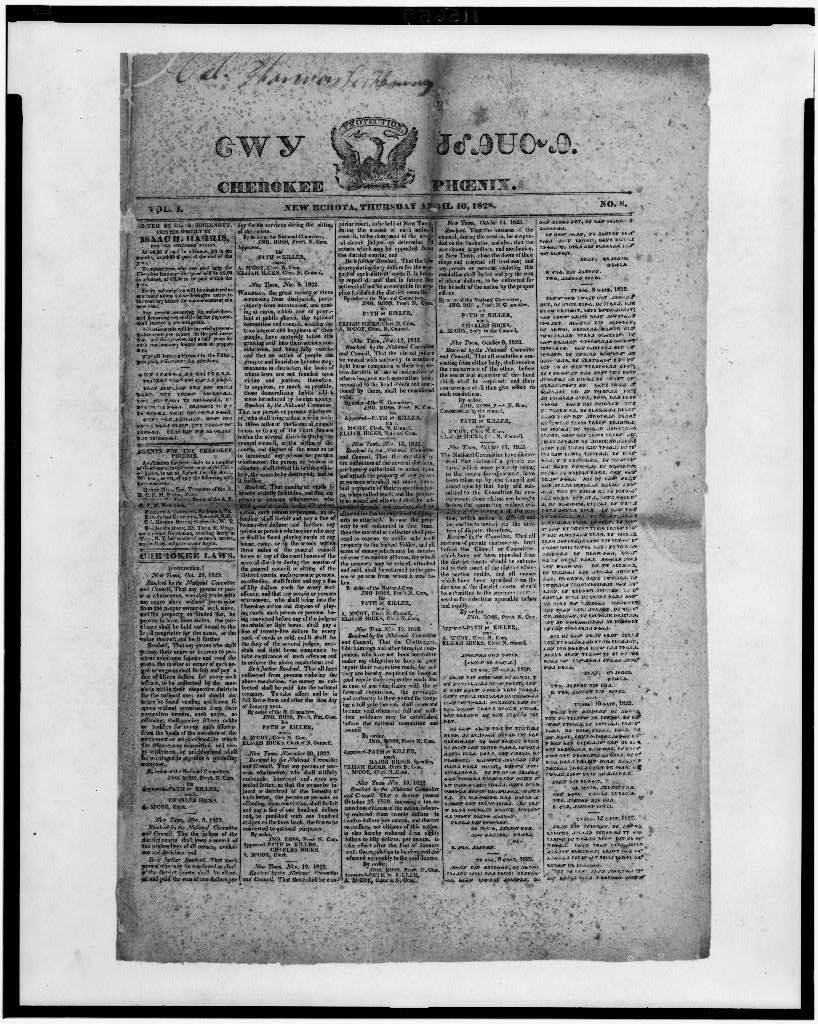
| 1825 | The Cherokee national legislature established New Echota as its capital; the site later held the first Indian-language newspaper office. | Calhoun, Gordon County | New Echota State Historic Site (Georgia State Parks) (Official site) |
| 1825 | Chief William McIntosh signed the second Treaty of Indian Springs ceding Creek land and was killed for it; by 1827 the Creeks were gone from Georgia. | Indian Springs | Muscogee (Creek) Removal (NPS, Ocmulgee Mounds NHP) |
| 1829 | Twenty years before California’s 1849 rush, thousands of prospectors flooded into the Cherokee Nation in north Georgia in the country’s first major gold rush; a U.S. Branch Mint at Dahlonega coined more than $6 million in gold from 1838 to 1861. | Dahlonega | Dahlonega Gold Museum State Historic Site (Georgia State Parks) (Official site) |
| 1832 | In Worcester v. Georgia the U.S. Supreme Court held that the Cherokees formed a nation with distinct sovereign powers; Georgia ignored the ruling. | New Echota / Washington, D.C. | New Georgia Encyclopedia: Worcester v. Georgia (1832) |
| December 1835 | U.S. officials met a small Cherokee minority at New Echota; twenty signers ceded all Cherokee land east of the Mississippi, and the Senate ratified the treaty in May 1836 by one vote. | New Echota | What Happened on the Trail of Tears? (NPS) |
| Summer 1836 to winter 1837 | After the Creek War of 1836, more than 14,000 Creeks were forced on a three-month journey of over 800 land miles to present-day Oklahoma. | Creek lands in Georgia and Alabama | Muscogee (Creek) Removal (NPS, Ocmulgee Mounds NHP) |
| 1837 | Engineers staked the end point of the Western and Atlantic Railroad; the town at the zero milepost, Terminus, became Marthasville in 1843 and Atlanta in 1845. | Atlanta | New Georgia Encyclopedia: Atlanta |
| May 1838 to March 1839 | Federal troops and state militias rounded up Cherokees into stockades from May 1838; by March 1839 all survivors had reached the west. | Cherokee lands in Georgia, Alabama and Tennessee | What Happened on the Trail of Tears? (NPS) |
| November 28, 1858 | The slave ship Wanderer smuggled 409 West African captives ashore at Jekyll Island, half a century after the U.S. banned the international slave trade. | Jekyll Island | New Georgia Encyclopedia: Wanderer |
Civil War
| When | What happened | Where | Source |
|---|---|---|---|
| January 19, 1861 | Georgia’s Secession Convention, meeting in the Milledgeville capitol, voted 208-89 to leave the Union; secession was never put to a popular vote. | Milledgeville | Georgia’s Secession Convention (Georgia Historical Society marker) |
| April 10-11, 1862 | U.S. forces began bombarding Fort Pulaski on April 10; the commander surrendered about 2:30 p.m. the next day. | Cockspur Island, near Savannah | Battle for Fort Pulaski (NPS) |
| September 18-20, 1863 | The Battle of Chickamauga was fought along Chickamauga Creek in north Georgia. | North Georgia (park at Fort Oglethorpe) | The Battle of Chickamauga (NPS) |
| Late February 1864 | The first prisoners arrived at Camp Sumter (Andersonville); about 45,000 Union soldiers were held there and nearly 13,000 died. | Andersonville, Sumter County | History of the Andersonville Prison (NPS) |
| June 27, 1864 | The Union attack at Kennesaw Mountain took place on the morning of June 27, as part of the 1864 Atlanta Campaign. | North and west of Marietta | Battle Detail, The Civil War (NPS) |
| July 22, 1864 | The Battle of Atlanta was fought, one of four inconclusive battles inside today’s I-285 Perimeter (Peachtree Creek July 20, Atlanta July 22, Ezra Church July 28, Utoy Creek August 6). | Atlanta | The Battles for Atlanta (Georgia Historical Society marker) |
| September 2, 1864 | Atlanta fell to Union forces after they cut the last supply railroad at Jonesboro, August 31 to September 1. | Atlanta | The Battles for Atlanta (Georgia Historical Society marker) |
| November 15, 1864 | U.S. forces under General William T. Sherman set out from Atlanta on the March to the Sea, a march of over 250 miles. | Atlanta | Georgia Historical Society to Commemorate Beginning of Sherman’s March to the Sea |
| December 1864 | Sherman’s forces captured Savannah. The Georgia Historical Society marker gives December 21, 1864; the National Park Service’s Fort Pulaski page says Sherman entered the city on December 22, 1864. | Savannah | March to the Sea: Savannah (Georgia Historical Society marker) |
| January 16, 1865 | Sherman issued Special Field Order No. 15, setting aside about 400,000 acres of coastal land from Charleston to Florida’s St. Johns River for freed families in forty-acre segments. | Savannah | New Georgia Encyclopedia: Sherman’s Field Order No. 15 |
| May 1865 | The Andersonville prison ceased operation after about fourteen months of use. | Andersonville, Sumter County | History of the Andersonville Prison (NPS) |
Reconstruction
| When | What happened | Where | Source |
|---|---|---|---|
| 1868 | Atlanta was chosen as Georgia’s capital, replacing Milledgeville. | Atlanta | New Georgia Encyclopedia: Atlanta |
| September 3, 1868 | The Georgia House voted that 25 of its 29 Black members were not qualified to hold office; two Black senators were expelled on September 12. | Atlanta | Documenting Reconstruction and Civil Rights in Georgia’s Records 1865-1870 (Georgia Archives) |
| September 19, 1868 | A rally in Mitchell County ended with about a dozen freedmen killed in the Camilla Massacre, one of the most violent episodes of Reconstruction in Georgia. | Camilla, Mitchell County | Camilla Massacre (Georgia Historical Society marker) |
| July 1870 | Georgia was readmitted to the Union for the second time; it had ratified the 15th Amendment in February. | Statewide | Documenting Reconstruction and Civil Rights in Georgia’s Records 1865-1870 (Georgia Archives) |
New South and Industry
| When | What happened | Where | Source |
|---|---|---|---|
| May 8, 1886 | The first glass of Coca-Cola, created by Atlanta pharmacist John Pemberton, was sold for five cents at Jacobs’ Pharmacy. | Atlanta | Birthplace of Coca-Cola (Georgia Historical Society marker) |
| September 1906 | White mobs attacked Black Atlantans in the Atlanta Race Massacre; estimates range from 25 to 40 African American deaths. | Atlanta | New Georgia Encyclopedia: Atlanta Race Massacre of 1906 |
| 1910 to 1920s | In the Great Migration, 74,000 Black Georgians left the state between 1910 and 1920 and 260,000 more in the 1920s, as the boll weevil and the 1915-1916 floods wrecked cotton farming. | Statewide | New Georgia Encyclopedia: Great Migration |
| March 12, 1912 | Juliette Gordon Low founded Girl Scouting in the United States in Savannah; her carriage house became the first Girl Scout headquarters. | Savannah | First Girl Scout Headquarters in America (Georgia Historical Society marker) |
20th Century
| When | What happened | Where | Source |
|---|---|---|---|
| January 15, 1929 | Martin Luther King Jr. was born in the house at 501 Auburn Avenue NE. | Atlanta | Birth Home (NPS, Martin Luther King, Jr. National Historical Park) |
| November 20, 1942 | The S.S. James Oglethorpe launched in Savannah, the first of 88 Liberty Ships from Southeastern Shipbuilding; Savannah and Brunswick yards built 173 Liberty Ships in World War II. | Savannah | S. S. James Oglethorpe and the Battle of the Atlantic (Georgia Historical Society marker) |
| April 12, 1945 | President Franklin D. Roosevelt died at the Little White House; he first came to Warm Springs in 1924, hoping to find a cure for polio. | Warm Springs, Meriwether County | Little White House Historic Site (Georgia State Parks) |
Civil Rights
| When | What happened | Where | Source |
|---|---|---|---|
| July 25, 1946 | Two African American couples were beaten and shot by an unmasked mob at Moore’s Ford Bridge on the Apalachee River. | Moore’s Ford Bridge, Apalachee River (GHS marker on US 78 at Locklin Road, at the Oconee County line) | Moore’s Ford Lynching (Georgia Historical Society marker) |
| March 15, 1960 | The first student sit-ins were held at 11 eating facilities in downtown Atlanta; 77 students were arrested. | Atlanta, Fulton County | Atlanta Student Movement (Georgia Historical Society marker) |
| January 9, 1961 | Hamilton Holmes registered at the University of Georgia, three days after a federal judge ruled that he and Charlayne Hunter had been kept out because of their race; they were UGA’s first two African American students. | Athens | New Georgia Encyclopedia: Hamilton Holmes (1941-1995) |
| November 1961 | The Albany Movement began at Shiloh Baptist Church; over two years 1,500 protesters were detained and Dr. King took part. | Albany, Dougherty County | Georgia Civil Rights Trail: The Albany Movement (Georgia Historical Society) |
Modern Georgia
| When | What happened | Where | Source |
|---|---|---|---|
| 1973 | Maynard Jackson was elected mayor of Atlanta, the first African American to serve as mayor of a major southern city. | Atlanta | New Georgia Encyclopedia: Maynard Jackson (1938-2003) |
| November 1976 | Plains native Jimmy Carter was elected the 39th president, the first president from Georgia; the Plains depot served as his campaign headquarters. | Plains | James Earl Carter, Jr. (NPS) |
| July 19 to August 4, 1996 | Atlanta hosted the Centennial Summer Olympic Games. | Atlanta | 1996 Summer Olympics: Games of the XXVI Olympiad (Georgia Historical Society marker) |
| March 12, 2019 | Ocmulgee National Monument, proclaimed by President Franklin D. Roosevelt on December 23, 1936, became Ocmulgee Mounds National Historical Park. | Macon | Management, Ocmulgee Mounds National Historical Park (NPS) |
| December 29, 2024 | The National Park Service announced the death of President Jimmy Carter, who was buried in his family plot at the Carter home, now part of Jimmy Carter National Historical Park. | Plains | National Park Service Mourns the Passing of President Jimmy Carter (NPS news release) |
| 2026 | Georgia marks the 250th anniversary of the United States through the Georgia US250 Commission, created by executive order of Gov. Brian Kemp, with the Georgia Historical Society, the Governor’s Office, the Department of Economic Development and Georgia Humanities as official partners. | Statewide | Georgia Commemorates America at 250 (Georgia Historical Society) |
Historic Sites to Visit, by Region
The highlights in each region. Hours, admission and every site are on historic sites in Georgia.
Historic Tours and Trails
46 ways to see Georgia history on foot, by car or with a ranger. All of them: historic tours in Georgia.
| Tour or trail | Where | Price | When |
|---|---|---|---|
| Trail of Tears National Historic Trail (Georgia sites) | North Georgia (Cherokee homeland) | Free to follow; partner sites charge their own admission | Year-round |
| Gullah Geechee Cultural Heritage Corridor (Georgia coast) | Coastal Georgia and the sea islands | Free | Year-round |
| U.S. Civil Rights Trail: Georgia sites | Atlanta and Albany | Free to follow; site admissions vary | Year-round |
| MLK NHP Birth Home presentations and Ebenezer “Church Talks” | Atlanta | Free | Multiple times daily; see park calendar |
| Jekyll Island Landmark Trolley Tour | Jekyll Island | See official site | See official site |
| Savannah Historic District (self-guided) | Savannah | Free | Any time |
| Owens-Thomas House & Slave Quarters guided tour | Savannah | $30 adults (7-day Telfair ticket); discounts for seniors, students, children | Tue-Sun every 15 minutes, 10-3:30; audio tours 3:30-4 |
| Historic Oakland Cemetery guided tours | Atlanta | See official site | Overview tours regularly; special-topic tours most Saturdays and Sundays |
History Events Coming Up
Reenactments, living history and candlelight tours with dates the organizers have posted. All 42: history events in Georgia.
| Event | Where | When |
|---|---|---|
| “Loyalists & Liberty: Savannah in the American Revolution” | Savannah | Oct 20, 2026 to Dec 31, 2026 |
| America 250 Augusta History Trail | Augusta | Oct 20, 2026 to Dec 31, 2026 |
| “Faces of the Revolution Tour” | Atlanta | Oct 22, 2026 to Dec 17, 2026 |
| Founders Day: Thanksgiving in Warm Springs | Warm Springs | Nov 7, 2026 |
| Syrup Makin’ Time (37th annual) | Juliette | Nov 7, 2026 |
| American Indian Heritage Symposium: “Beyond the Founding Story: Indigenous Histories, Archives, and Memory” | Morrow | Nov 13, 2026 |
| Autumn Encampment 2026 (colonial military reenactment) | Darien | Nov 13, 2026 to Nov 14, 2026 |
| Historic Skills and Crafts Show | Dallas | Nov 14, 2026 |
Historical Markers, Archives and America 250
| Program | Run by | What it is | Link |
|---|---|---|---|
| Georgia Historical Marker Program | Georgia Historical Society | Statewide roadside marker program GHS has administered since 1998; GHS also coordinates upkeep of markers erected before 1998 and accepts new marker applications. (“Explore 2,200+ historical markers erected and maintained by GHS”; “nearly 300 new historical markers” erected since 1998) | Official page |
| Explore Georgia Historical Markers (searchable map database) | Georgia Historical Society | Map-based search of markers, filterable by region, time period and topic; also a mobile app. (2,200+) | Official page |
| National Register of Historic Places in Georgia | Georgia Department of Community Affairs, Historic Preservation Division (State Historic Preservation Office) | Georgia’s listings in the federal National Register, nominated through the state HPD. (“As of , Georgia has 2,238 listings comprising 91,085 resources in the National Register of Historic Places.”) | Official page |
| GNAHRGIS (Georgia’s Natural, Archaeological and Historic Resources GIS) | Georgia DCA Historic Preservation Division with partners | Online GIS of surveyed historic resources, including scanned survey forms and photographs. (Not stated on page read) | Official page |
| Georgia Archives | University System of Georgia (Georgia Archives) | The state’s archives in Morrow, collecting Georgia’s historical records since 1918; free research room Tue-Sat 9-4 and public lunch-and-learn lectures. (Not stated) | Official page |
| Georgia Historical Society | Georgia Historical Society (private nonprofit, founded 1839) | Statewide historical society with research center in Savannah and the Jepson House Education Center; runs the marker program, the Georgia History Festival and Today in Georgia History. (Not stated) | Official page |
| Georgia US250 Commission / Georgia 250 | State of Georgia (commission created by executive order of Gov. Brian Kemp) with GHS, the Governor’s Office, the Department of Economic Development and Georgia Humanities | Georgia’s official U.S. semiquincentennial effort; approved events post to the Georgia US250 site and statewide events calendar. (Explore Georgia GA250 calendar showed 25 events when read) | Official page |
| New Georgia Encyclopedia | Georgia Humanities with UGA Libraries, UGA Press and University System of Georgia/GALILEO | Free online encyclopedia of Georgia history and culture, online since 2004. (Not stated on About page) | Official page |
| Georgia State Parks & Historic Sites | Georgia Department of Natural Resources | Runs Georgia’s state historic sites and state parks, with an online events calendar by site. (Not stated on pages read) | Official page |
| Gullah Geechee Cultural Heritage Corridor | Gullah Geechee Cultural Heritage Corridor Commission (NPS) | Federal heritage corridor from Pender County, NC, to St. Johns County, FL, designated October 12, 2006; offers a StoryMap of sites. (Not stated) | Official page |
National Historic Landmarks
Georgia has 50 National Historic Landmarks on the National Park Service list. See every Georgia National Historic Landmark by region, with which ones you can visit.
Frequently Asked Questions
When did Georgia become a state?
Georgia became the fourth state to ratify the U.S. Constitution on January 2, 1788, in Augusta. Augusta was the state capital from 1785 until 1795, when the seat of government moved to the new capital, Louisville (source: Georgia’s State Capital – Georgia Historical Society).
How many National Historic Landmarks are in Georgia?
Georgia has 50 National Historic Landmarks on the National Park Service list by state (last updated ). They range from Etowah and Kolomoki mounds to the Savannah Historic District, the Martin Luther King, Jr. Historic District and Andalusia Farm, added in 2022 (source: List of NHLs by State – National Park Service).
How many historical markers are in Georgia?
The Georgia Historical Society says it has more than 2,200 historical markers across the state, which you can search on its Explore Georgia Historical Markers map. GHS has run the state marker program since 1998 and has put up nearly 300 new markers in that time (source: Explore Georgia Historical Markers – Georgia Historical Society).
How many Georgia places are on the National Register of Historic Places?
As of , Georgia had 2,238 listings in the National Register of Historic Places, covering 91,085 historic resources. The state Historic Preservation Division, part of the Georgia Department of Community Affairs, nominates places to the Register (source: Georgia Adds Two New Resources to National Register of Historic Places – Georgia DCA).
How is Georgia marking America’s 250th anniversary?
Governor Brian Kemp created the Georgia US250 Commission by executive order. Its official partners are the Georgia Historical Society, the Governor’s Office, the Department of Economic Development and Georgia Humanities. GHS adds a US250 marker trail, a 50-object publication and re-released Today in Georgia History segments (source: Georgia Commemorates America at 250 – Georgia Historical Society).
When was Savannah founded?
Savannah was founded in February 1733. The first settlers arrived on February 1 at Yamacraw Bluff, the site James Oglethorpe chose, and the town was laid out in wards around public squares. People lived in Georgia thousands of years earlier, as the Ocmulgee and Etowah mounds show (source: Savannah, Georgia: The Lasting Legacy of Colonial City Planning – National Park Service).
When did the Trail of Tears happen in Georgia?
U.S. officials signed the Treaty of New Echota with a small Cherokee minority in December 1835. Federal troops and state militias began forcing Cherokees into stockades in May 1838, and by March 1839 all survivors had reached the west (source: What Happened on the Trail of Tears? – National Park Service).
When was Sherman’s March to the Sea?
Union forces under General William T. Sherman left Atlanta on November 15, 1864, on a march of over 250 miles to the coast. They captured Savannah in December 1864: a Georgia Historical Society marker gives December 21, and the National Park Service gives December 22 (source: Georgia Historical Society to Commemorate Beginning of Sherman’s March to the Sea).
Last checked by the It’s Georgia editors against each operator’s, agency’s or organizer’s own page.
How we checked this guide: Dates, hours, admission and parking prices, and access details were verified against the official sources listed below on . Operators change schedules and raise prices without notice, so confirm anything time-sensitive before you drive. The figures in this guide also feed our Georgia Attraction Transparency Index and Family Day-Out Cost Index.
Sources
- Georgia’s State Capital (Georgia Historical Society marker)
- National Park Service: places in Georgia
- National Park Service: National Historic Landmarks program
- Georgia: Ocmulgee National Monument (NPS)
- Kolomoki Mounds State Park (Georgia State Parks)
- Etowah Indian Mounds (Georgia State Parks)
- New Georgia Encyclopedia: Hernando de Soto in Georgia
- New Georgia Encyclopedia: Mission Santa Catalina de Guale
- Georgia Historical Marker Program
- Explore Georgia Historical Markers (searchable map database)
- National Register of Historic Places in Georgia
- GNAHRGIS (Georgia’s Natural, Archaeological and Historic Resources GIS)
- Georgia Archives
- Georgia Historical Society
- Georgia US250 Commission / Georgia 250
- New Georgia Encyclopedia
- Georgia State Parks & Historic Sites
- Gullah Geechee Cultural Heritage Corridor

The It's Georgia Editorial Team writes every answer on this site around the questions a busy family actually asks before a trip: how long is the drive, what does parking cost, can the stroller make it, are dogs allowed. Details are checked against official park, city, and venue sources, and each answer shows the date it was last updated.
More From Things to Do


Map of The Places in This Guide
Cite this page: It's Georgia, “Georgia History: Historic Sites, Landmarks, Tours and Timeline”, itsgeorgia.com/things-to-do/georgia-history-and-heritage/ (updated ). Free to quote with attribution and a link to this page.