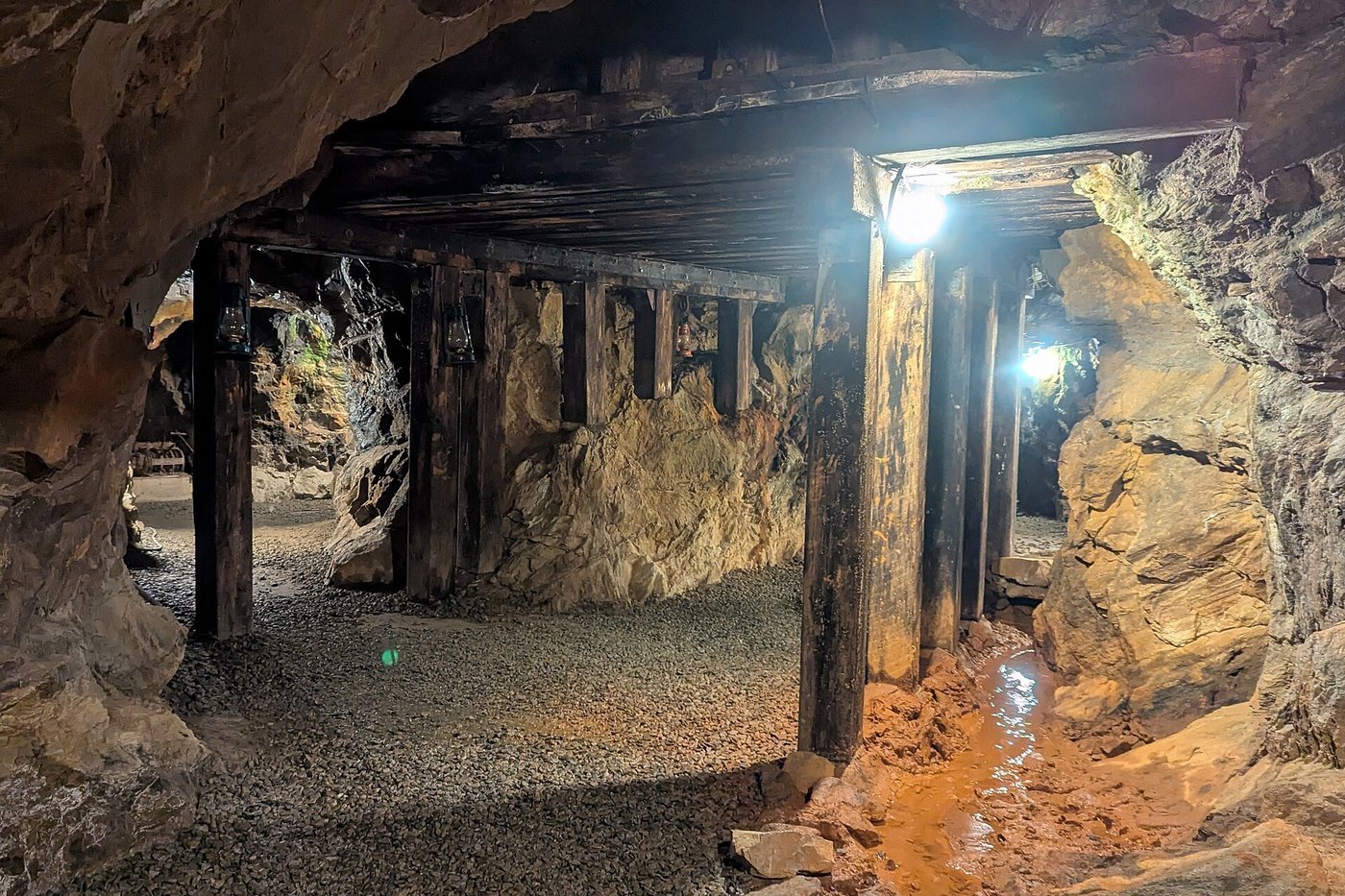
The next Dahlonega Gold Rush Days is Saturday and Sunday, October 16-17, 2027 (the 2026 festival ran October 17-18), filling the public square with more than 300 art, craft, and food vendors. Those dates come from the festival’s own official site, goldrushdaysfestival.com, and match its recurring pattern — always the third full weekend of October. The Dahlonega-Lumpkin County Convention & Visitors Bureau page now shows the same dates, October 17–18, 2026 (checked ).
No admission fee is published for Dahlonega Gold Rush Days (see the note below). The real planning challenge is parking: organizers estimate the festival draws over 200,000 visits across the weekend onto a small historic square, so the square itself and every adjacent street fill early on Saturday.
Not confirmed by the organizers. Gold Rush Days is a street festival on and around Dahlonega’s public square, and this guide assumes you can walk in without a ticket. But neither the festival’s own site (goldrushdaysfestival.com) nor the Dahlonega-Lumpkin County visitor bureau’s event page states an admission price or says entry is free (both checked ). We’ll update this guide when either one publishes it. Know otherwise? Tell us.
This guide covers what’s officially confirmed about Dahlonega Gold Rush Days, the parking reality on and around the square, and how to plan a visit with kids or without a dog.
| Question | Answer |
|---|---|
| What does admission cost? | No price is published. Neither the festival nor the visitor bureau lists an admission fee — you only pay individual vendors and whatever you pay to park. |
| When is it? | October 17-18, 2026 — the third full weekend of October, as always. Confirmed on the festival’s own site and the CVB page (checked ). |
| How far is it, and how long should you budget? | About 1 hour from Atlanta, and 2-4 hours on the square. |
| When is the best time to go? | Sunday before noon is the lightest window; Saturday from late morning through mid-afternoon is the busiest of the weekend. |
| Where do you park, and what does it cost? | There is no dedicated festival lot. The UNG parking deck at South Chestatee Street and Choice Avenue is open to the public all day Saturday and Sunday, and the North Park Street and Warwick Street lots suit a full festival day. Per-day pricing is not published. |
| Are dogs allowed? | There is no published ban, since it is a public street festival, but a crowd estimated at 200,000 visits and food vendors at ground level make it a poor fit for most dogs. |
| Is it stroller-friendly? | Partly. The square and sidewalks are flat and paved, but Saturday-afternoon crowd density makes a stroller slow going. |
What exactly is Dahlonega Gold Rush Days?
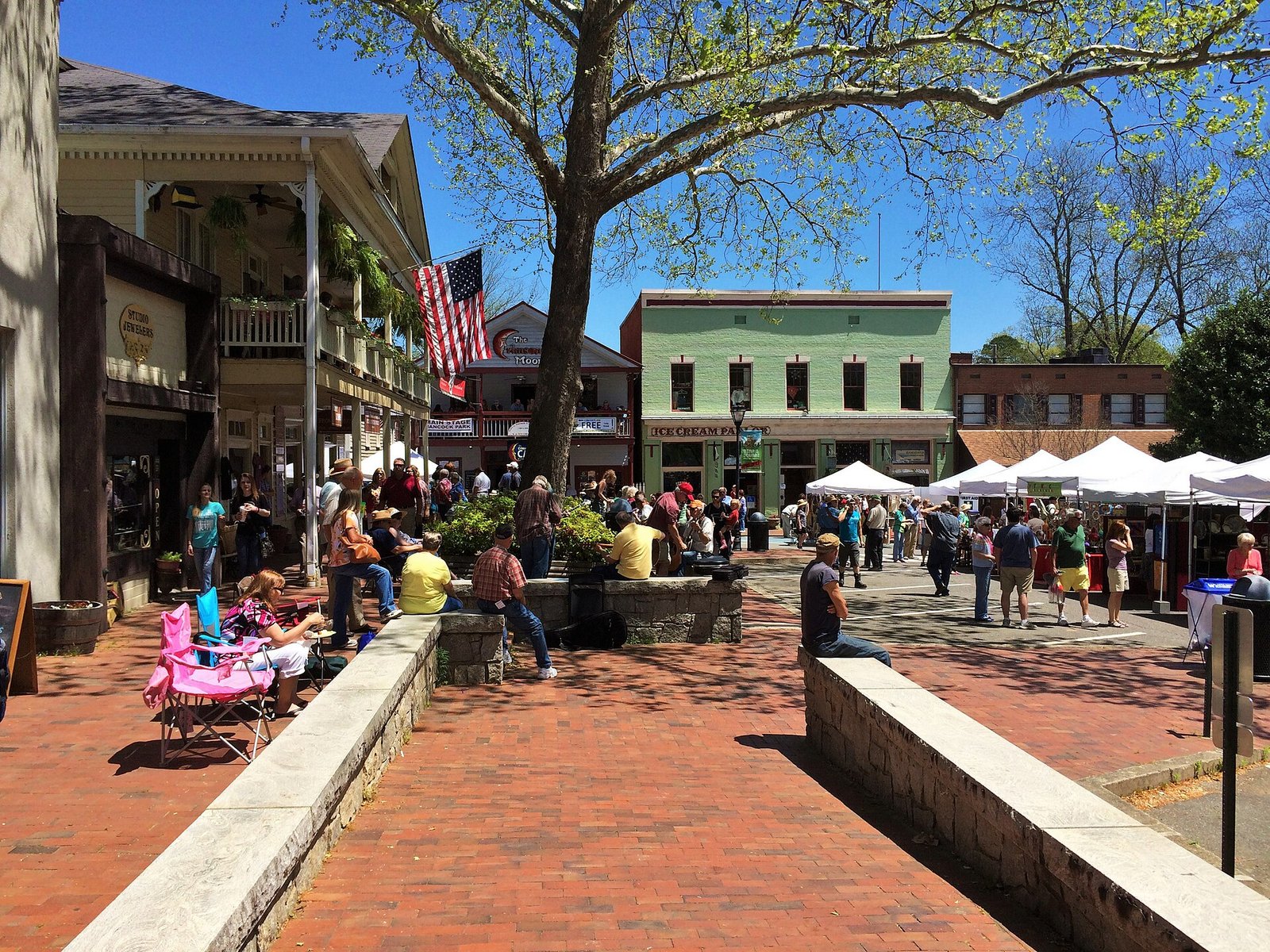
Dahlonega Gold Rush Days is an annual street festival on and around Dahlonega’s historic public square, marking the town’s 1828 gold discovery — the event that started the first major U.S. gold rush, per the Dahlonega-Lumpkin County CVB.
More than 300 art and craft exhibitors and food vendors set up around the square and the surrounding historic district for the weekend. It’s outdoors on public streets, and no ticket or admission price is published. If you are choosing between north Georgia October festivals, see our guides to Helen Oktoberfest and the Georgia Apple Festival in Ellijay.
When is Gold Rush Days, and what are the hours?
| Detail | What’s confirmed |
|---|---|
| Recurring pattern | Third full weekend of October, every year |
| 2026 dates | Saturday-Sunday, October 17-18, 2026, per goldrushdaysfestival.com |
| CVB page | Shows October 17–18, 2026 (checked ) |
| Location | Public Square, Dahlonega, GA 30533 |
The Dahlonega-Lumpkin County CVB’s official Gold Rush Days page states the festival is “always held the third full weekend in October” but has not updated to the 2026 date range. The festival’s own site, goldrushdaysfestival.com, does: it carries October 17 & 18, 2026 on its front page along with a 2026 schedule.
That is the page to check in the weeks before your trip, since the CVB typically updates it as the date approaches. The page also doesn’t post specific daily hours; historically the festival runs during normal daytime hours on Saturday and Sunday, so plan to arrive by mid-morning and expect vendors to start closing by early evening.
What does it cost to get in?
Neither the festival nor the Dahlonega-Lumpkin County CVB publishes an admission price. This guide assumes you can walk the square and browse vendors without a ticket — you only spend money on what you buy from individual food and craft booths. That makes parking, not admission, the actual cost of your visit.
Where do you park, and what does it cost?
There’s no dedicated festival parking lot at Dahlonega Gold Rush Days — you’re working from the town’s everyday downtown parking supply, and it fills fast against a reported 200,000 visits over the weekend. Per the city’s official downtown parking guide, your main options are:
- UNG parking deck (South Chestatee Street & Choice Avenue) — available to the public after 5:30 p.m. on weekdays, and all day on Saturdays and Sundays, which covers both festival days.
- North Park Street and Warwick Street lots — the city’s guide flags these for longer stays, a better fit for a full festival day than the 3-hour “Shop & Dine” spaces closer to the square.
- Choice Street lot and on-square spaces — short-term only; these are the first to fill on festival Saturday.
The city’s guide doesn’t publish per-day pricing for these lots, and it doesn’t list an official shuttle or park-and-ride program for Gold Rush Days specifically.
In practice, small-town festivals of this size are typically supplemented by private and church-lot parking within a few blocks of the square, often run as cash fundraisers — expect to pay something if you park close, and confirm the rate from posted signage rather than assuming a set price, since neither the CVB nor the festival’s own page publishes one.
- Arrive by 9 a.m. on Saturday if you want anything within walking distance of the square.
- Carry cash for private lots, which commonly run cash-only during festival weekends in small Georgia towns.
- Plan to walk. With a crowd this size, even a spot 10-15 minutes’ walk from the square is a good outcome on Saturday afternoon.
Which roads close on festival weekend?
Expect the streets immediately bordering the public square to close to vehicle traffic for the festival footprint — standard for a 300-vendor street fair occupying the square and historic district. Dahlonega’s official pages don’t publish a specific closure map for Gold Rush Days, so approach downtown planning to park and walk rather than drive through or around the square itself, and build in extra time if your route normally crosses through the square.
| When you go | Crowd level | Parking outlook | Best for |
|---|---|---|---|
| Saturday, arriving by 9 a.m. | Building, ahead of the peak | Your best chance at anything within walking distance of the square | Getting parked and browsing before the crowd arrives |
| Saturday, late morning to mid-afternoon | Heaviest window of the entire weekend | Square and every adjacent street full; a 10-15 minute walk in is a good outcome | Full festival energy, if crowd density does not bother you |
| Sunday, before noon | Lightest crowds of the two days | Easier than Saturday; the UNG deck is open to the public all day | Strollers, young kids, cooler temperatures, and better photo light |
Which day and time should you go?
Sunday morning is the lighter of the two festival days at Dahlonega Gold Rush Days; Saturday afternoon is the busiest window of the entire weekend. With an estimated 200,000 visits spread across two days, Saturday consistently draws the bigger share.
- Lightest crowds: Sunday before noon.
- Heaviest crowds: Saturday from late morning through mid-afternoon.
- Best photo light and cooler temperatures: either morning, before the midday sun and the midday crowd both peak on the square.
How does it work with young kids and a stroller?
Dahlonega Gold Rush Days is an outdoor, stroller-passable street festival, but sidewalks and square pathways get tight with 200,000 visits over the weekend. A stroller works logistically on the flat square and sidewalks, but plan for slow going and frequent stops in the densest vendor rows, especially Saturday afternoon.
- Stroller reality: flat, paved terrain around the square, but crowd density on Saturday afternoon makes maneuvering slow — a baby carrier is a solid backup for the busiest hours.
- Restrooms: the official festival page doesn’t detail restroom locations; expect standard downtown public restrooms plus event portable units near the square, and lines during peak hours.
- Kids’ activities: the festival publishes its 2026 schedule only as an image on goldrushdaysfestival.com, and the CVB page itemises no children’s programming. Past Dahlonega festivals tied to the town’s gold-rush heritage have included craft vendors and family-friendly food options around the square — confirm current-year kid activities on dahlonega.org closer to the date.
- Noise: lower than an indoor amplified venue — it’s an open-air vendor festival, so the main sensory load is crowd density rather than sound.
Can you bring a dog to Gold Rush Days?
Dahlonega’s official Gold Rush Days page doesn’t publish a pet policy, and because the festival occupies public sidewalks and the square rather than a ticketed venue, leashed dogs aren’t formally barred the way they would be at an indoor, food-licensed hall. That said, a crowd estimated at 200,000 visits over one weekend, warm October midday temperatures, and dozens of food vendors at ground level make this a poor environment for most dogs.
If you’re bringing one, keep it leashed, avoid peak Saturday-afternoon hours, bring water, and be ready to leave early if the crowd density becomes stressful for your pet.
Want to check the policy at a specific Georgia attraction? See our 303-attraction Georgia dog-policy database.
Where to Stay for Dahlonega Gold Rush Days
Book lodging as early as possible for Gold Rush Days weekend — it’s one of Dahlonega’s two or three biggest weekends of the year, alongside spring’s Bear on the Square festival. Staying within walking distance of the square avoids the parking search entirely; staying in one of the area’s small towns a short drive out is the fallback once in-town rooms sell out.
See our roundup of the best small towns in north Georgia and the broader list of best small towns in Georgia for nearby alternatives if Dahlonega itself is booked solid.
Wineries and Gold Rush Days Weekend
Dahlonega-Lumpkin County is home to eight wineries and 12 wine-tasting rooms, per the CVB’s official wineries page, and most sit a short drive from the square rather than inside the festival footprint itself.
Expect nearby tasting rooms to see overflow crowds from festival visitors looking for a break from the square, and some may run extended hours or their own tastings that weekend — confirm directly with individual wineries, since the CVB doesn’t publish a coordinated festival-weekend schedule for them. Our full guide to north Georgia wineries covers the wine trail in more detail if you’re building a weekend around both.
What to Skip and Common Mistakes
- Don’t plan to drive onto or through the square. Streets around the festival footprint close to traffic; park once and walk in.
- Don’t expect a lot right on the square. Those spaces are the first gone — plan on the UNG deck or an outer lot and a walk.
- Don’t bring your dog for a full Saturday-afternoon visit unless you’re prepared to leave early — the crowd density and October heat aren’t dog-friendly for hours at a stretch.
- Don’t skip cash. Vendor booths and any private parking lots commonly run cash-only or cash-preferred.
- Don’t wait until October to book a room. Third-weekend-of-October lodging in Dahlonega sells out well in advance most years.
Weather and Rain Policy
Dahlonega Gold Rush Days is an outdoor, rain-or-shine street festival — the official festival page doesn’t publish a cancellation or rain-date policy, and outdoor vendor festivals of this scale typically proceed through light rain with vendors adjusting their own canopies and displays.
Check the CVB’s weather page or local forecasts the morning of your visit, and bring layers — north Georgia mornings in mid-to-late October can start in the 40s-50s°F even on a sunny festival day. To build a longer trip around the festival weekend, see our north Georgia mountain road trip itinerary.
Which plan fits your trip?
| If you… | Do this | Why |
|---|---|---|
| Only have a few hours | Go Sunday before noon and keep it to the square | Sunday before noon is the lightest window of the weekend, and 2-4 hours on the square is the ideal visit length anyway. |
| Can only come on Saturday | Arrive by 9 a.m. and head straight for the UNG parking deck at South Chestatee Street and Choice Avenue | Late morning through mid-afternoon Saturday is the heaviest window of the whole weekend. The UNG deck is open to the public all day Saturday and Sunday, and 9 a.m. is your best shot at anything within walking distance. |
| Have a toddler and a stroller | Go Sunday morning, and pack a baby carrier as a backup | The square and sidewalks are flat and paved, but an estimated 200,000 visits over the weekend make the densest vendor rows slow going with a stroller, especially Saturday afternoon. |
| Are bringing the dog | Leave the dog home. If you must bring one, keep it leashed, carry water, and skip Saturday afternoon | There is no published ban since it is a public street festival, but 200,000 visits, warm October midday temperatures, and dozens of food vendors at ground level make it a poor fit for most dogs. |
| Want to avoid the parking search | Park in the North Park Street or Warwick Street lots and carry cash | The city’s guide flags those two for longer stays, unlike the 3-hour Shop & Dine spaces nearer the square, which fill first. Private lots commonly run cash-only on festival weekends. |
| Get rained on | Come anyway, in layers | It is an outdoor, rain-or-shine street festival with no published rain date, and mid-to-late October mornings in north Georgia can start in the 40s-50s°F. |
| Need a break from the crowd | Drive a few minutes off the square to a tasting room | Dahlonega-Lumpkin County has eight wineries and 12 wine-tasting rooms, most of them a short drive from the square rather than inside the festival footprint. |
Part of it is documented: the Confederate treasure train that reached Georgia in 1865 carried $327,022 in gold and silver — including, according to the New Georgia Encyclopedia, floor sweepings from the Dahlonega mint. The rest is legend. The full story, and where to see Dahlonega’s real gold at the Gold Museum: Georgia local legends.
Local legend: “There’s gold in them thar hills,” Dahlonega
What is actually true: The New Georgia Encyclopedia gives the real words, spoken by mint assayer Matthew Fleming Stephenson to miners leaving for California: “Why go to California? In that ridge lies more gold than man ever dreamt of. There’s millions in it!” The miners went anyway and carried his line west, and Mark Twain later gave a version of it to his character Mulberry Sellers in The American Claimant (1892). Georgia’s own gold rush began after gold was found in 1828–29.
For the other festivals on the same weekends, see Georgia fall festivals, weekend by weekend.
For the gold mines, the Gold Museum, wineries and free downtown parking the rest of the year, see our things to do in Dahlonega guide.
FAQ
When is Dahlonega Gold Rush Days 2027?
Saturday and Sunday, October 16-17, 2027. The festival’s own website, goldrushdaysfestival.com, shows “October 16 & 17, 2027” (read October 22, 2026), which fits its pattern of the third full weekend of October. Daily hours for 2027 are not posted yet.
When is Dahlonega Gold Rush Days 2026?
October 17-18, 2026, a Saturday and Sunday. The festival’s own site publishes those dates, and they follow its permanent pattern of the third full weekend of October. The Dahlonega-Lumpkin County CVB page lists the same October 17–18, 2026 dates.
Is Dahlonega Gold Rush Days free?
Probably, but it isn’t confirmed: neither the festival nor the visitor bureau publishes an admission price (see the note near the top of this guide) — you only pay for what you buy from vendors and for parking, since there’s no dedicated free festival lot.
Where do you park for Dahlonega Gold Rush Days?
The UNG parking deck at South Chestatee Street and Choice Avenue is open to the public all day on Saturday and Sunday. North Park Street and Warwick Street lots are better for a full festival day than the 3-hour “Shop & Dine” spaces closer to the square. Arrive by 9 a.m. on Saturday for the best chance at a close spot.
Is there a shuttle for Dahlonega Gold Rush Days?
None is listed. Neither the festival’s site nor the city’s Downtown Parking Guide mentions a shuttle or park-and-ride (both read October 22, 2026). The city points weekend visitors first to the UNG parking deck at South Chestatee Street and Choice Avenue, open all day Saturdays and Sundays, then to the Park & Stay spaces in the North Park Street and Warwick Street lots.
Are dogs allowed at Dahlonega Gold Rush Days?
There’s no published ban since it’s a public street festival, but with an estimated 200,000 visits over the weekend and no shade or water infrastructure built for pets, most dogs are better off staying home. If you bring one, keep it leashed and avoid Saturday afternoon’s peak crowd.
How big is Dahlonega Gold Rush Days?
Organizers estimate more than 300 art, craft, and food vendors and over 200,000 visits across the weekend, making it one of Dahlonega’s largest annual events alongside spring’s Bear on the Square Mountain Festival.
Do the wineries near Dahlonega do anything special during Gold Rush Days?
The CVB doesn’t publish a coordinated festival-weekend schedule for the area’s eight wineries and 12 tasting rooms, but expect overflow crowds from festival visitors and check individual winery calendars directly, since some may extend hours or run their own tastings that weekend.
Should we go on Saturday or Sunday?
Sunday, and specifically Sunday before noon, which is the lightest window of the weekend. Saturday from late morning through mid-afternoon is the busiest stretch of the entire festival, when the square and every adjacent street are full. No admission fee is published for either day, so the only trade-off is crowd density and how far you end up walking from your car.
Is Gold Rush Days worth the drive from Atlanta with young kids?
Yes, if you go Sunday morning and keep it short. The drive is about an hour, no admission fee is published, 2-4 hours is the ideal visit length, and the square is flat and paved so a stroller works. The catch is Saturday afternoon congestion, and that the 2026 schedule is published only as an image on the festival site, so check it for kids’ programming before you go.
What should you do if you only have a couple of hours on the square?
Go Sunday before noon, the lightest window of the weekend. Park in the UNG deck at South Chestatee Street and Choice Avenue, which is open to the public all day Saturday and Sunday, then walk the vendor rows on and around the square. At 2-4 hours, that is the ideal visit length anyway, and no admission fee is published.
What should you do if it rains on your festival day?
Go anyway and dress for it. The official festival page publishes no cancellation or rain-date policy, and outdoor vendor festivals of this scale typically proceed through light rain. Bring layers, since mid-to-late October mornings in north Georgia can start in the 40s-50s°F. For time out of the weather, the area’s tasting rooms sit a short drive off the square.
How we checked this guide: Dates, hours, admission and parking prices, and access details were verified against the official sources listed below on . Operators change schedules and raise prices without notice, so confirm anything time-sensitive before you drive. The figures in this guide also feed our Georgia Attraction Transparency Index and Family Day-Out Cost Index.
Sources
- Gold Rush Days Festival — official festival site, October 17 & 18, 2026
- Dahlonega Gold Rush Days — official event page, Dahlonega-Lumpkin County CVB
- Downtown Dahlonega parking guide — official CVB page
- Dahlonega-Lumpkin County wineries — official CVB page
- Dahlonega weather — official CVB page
- Dahlonega festivals and annual events — official CVB page
Coming up near Dahlonega
- Helen OktoberfestOn now · Helen · about 19 mi
- Cress Creeks Farm Corn MazeOn now · Ellijay · about 31 mi
- Mountain Moonshine FestivalOn now · Dawsonville · about 11 mi
- Appalachian Brew and Music FestivalOn now · Hiawassee · about 32 mi
Places nearby
- Calhoun MineNational Historic Landmark · in Dahlonega
- Dahlonega Gold Museum State Historic SiteState historic site · about 1 mi
- Amicalola Falls State ParkPark · Dawsonville · about 11 mi
- Appalachian Approach TrailTrail · Dawsonville · about 11 mi
Straight-line distance from Dahlonega, not driving miles. Events within 40 miles, places within 25; “about” means measured from a town centre.
Every Georgia event on the calendar All places to go in Georgia

Hank Whitlock is the pen name of the It's Georgia editor. Every guide is built around the questions a busy family actually asks before a trip: how long is the drive, what does parking cost, can the stroller make it, are dogs allowed. Details are checked against official park, city, and venue sources, and each guide shows the date it was last updated.
More from Events
Cite this page: It's Georgia, “Dahlonega Gold Rush Days: Dates, Parking, and What to Expect”, itsgeorgia.com/events/dahlonega-gold-rush-days/ (updated ). Free to quote with attribution and a link to this page.