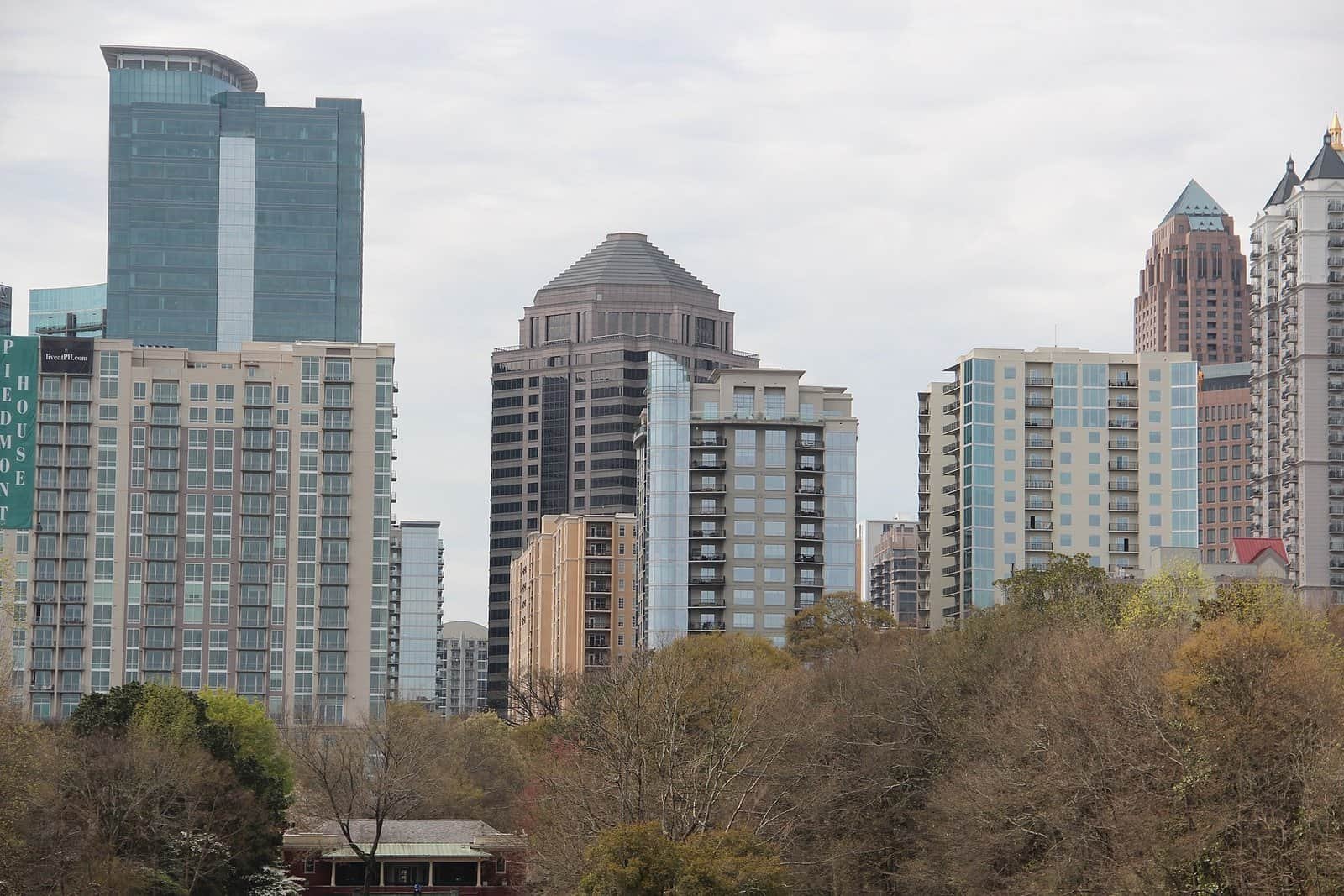
The best Atlanta suburbs to live in split into four groups: MARTA-connected close-in suburbs (Decatur, Sandy Springs, Dunwoody, Brookhaven), high-income North Fulton suburbs with the longest commutes (Alpharetta, Milton, Johns Creek, Roswell), value-priced Cobb and Gwinnett suburbs (Smyrna, Marietta, Duluth, Suwanee), and car-dependent exurbs built around a specific lifestyle (Woodstock, Peachtree City). There is no single “best” suburb — the right one depends on whether you’re optimizing for commute time, school district, home price, or transit access, and those four things pull in different directions almost everywhere in metro Atlanta.
This guide compares 14 Atlanta-area suburbs on the numbers that change a relocation decision: county and school district, Census-verified home values, drive time to Midtown/Downtown, and whether MARTA reaches the city at all. It avoids “safest” or “best schools” rankings that can’t be backed by a dated, named source — for that comparison, see our safest places to live in Georgia guide, which cites FBI/NIBRS crime data directly. If you’re choosing specifically for kids, our best small towns near Atlanta for families guide covers overlapping ground with a family-first lens.
Every home value, rent, and income figure below comes from the U.S. Census Bureau’s ACS 2020-2024 5-year estimates, its most recent release. Commute estimates are approximate drive times to Midtown/Downtown in normal traffic; expect 15-25 minutes more at weekday rush hour.
| Question | Answer |
|---|---|
| Which suburb has the shortest commute? | Decatur, about 6 miles and 15-20 minutes to Downtown in normal traffic. |
| Which suburb is the most affordable? | Duluth, at a $400,800 median home value (Census ACS 2020-2024), followed by Woodstock at $436,500. |
| Which suburb is the most expensive? | Milton, at a $789,000 median home value and a $171,295 median household income. |
| Which suburbs have MARTA rail? | Only four of the 14 — Decatur, Sandy Springs, Dunwoody and Brookhaven. |
| How many suburbs does this guide compare? | 14, on county, school district, Census home value, drive time and MARTA access. |
| How much does rush hour add to the drive? | Expect 15-25 minutes more than the normal-traffic estimates listed here. |
| Which suburbs have their own school district? | Decatur (City Schools of Decatur) and Marietta (Marietta City Schools); everywhere else is countywide. |
Which are the best Atlanta suburbs to live in?
| Suburb | County | School District | Median Home Value | Commute to Midtown/Downtown | MARTA Access |
|---|---|---|---|---|---|
| Decatur | DeKalb | City Schools of Decatur | $701,400 | ~6 mi / 15-20 min | Yes — 3 rail stations |
| Sandy Springs | Fulton | Fulton County Schools | $619,800 | ~12 mi / 20-25 min | Yes — Red Line, 2 stations |
| Smyrna | Cobb | Cobb County School District | $449,500 | ~12 mi / 20-25 min | No |
| Brookhaven | DeKalb | DeKalb County School District | $692,700 | ~10 mi / 20-25 min | Yes — Gold Line |
| Dunwoody | DeKalb | DeKalb County School District | $602,900 | ~15 mi / 25-30 min | Yes — Red Line |
| Marietta / East Cobb | Cobb | Marietta City Schools / Cobb Co. School District | $448,500 | ~20 mi / 30-40 min | No |
| Roswell | Fulton | Fulton County Schools | $567,100 | ~20 mi / 30-40 min | No |
| Alpharetta | Fulton | Fulton County Schools | $649,000 | ~25 mi / 35-45 min | No |
| Duluth | Gwinnett | Gwinnett County Public Schools | $400,800 | ~25 mi / 35-45 min | No |
| Milton | Fulton | Fulton County Schools | $789,000 | ~30 mi / 45-55 min | No |
| Johns Creek | Fulton | Fulton County Schools | $629,400 | ~30 mi / 45-55 min | No |
| Suwanee | Gwinnett | Gwinnett County Public Schools | $480,600 | ~30 mi / 40-50 min | No |
| Woodstock | Cherokee | Cherokee County School District | $436,500 | ~30 mi / 40-50 min | No |
| Peachtree City | Fayette | Fayette County Schools | $482,500 | ~30 mi / 40-50 min | No |
Median home value and median household income: U.S. Census Bureau QuickFacts, 2020-2024 ACS 5-year estimates. Commute times are approximate, normal-traffic estimates to Midtown/Downtown Atlanta and run longer during weekday rush hour. MARTA access reflects rail stations located within city limits.

How far does MARTA rail really reach?
Of the 14 Atlanta suburbs in this guide, only four sit inside MARTA’s rail service area: Decatur, Sandy Springs, Dunwoody, and Brookhaven. MARTA operates almost exclusively within Fulton, DeKalb, and Clayton counties. Cobb, Gwinnett, Cherokee, and Fayette counties are outside MARTA’s service area entirely, so Marietta, Smyrna, Duluth, Suwanee, Woodstock, and Peachtree City have no rail or bus option — residents drive. The regional GRTA Xpress commuter bus network runs park-and-ride routes into Downtown and Midtown from several outlying counties, but none of the 14 suburbs below currently has an Xpress stop within city limits; the closest runs from the Town Center/Big Shanty area of north Cobb. Confirm current routes directly with MARTA and Xpress before assuming a transit option exists from a specific address.
Decatur: Shortest Commute, Its Own School District
Decatur (DeKalb County) has the shortest commute of any suburb here — about 6 miles, 15-20 minutes to Downtown — plus its own compact school system, City Schools of Decatur, separate from DeKalb County’s larger district. Population 25,276, median home value $701,400, median household income $139,397 (Census ACS 2020-2024). MARTA’s Decatur, Avondale, and East Lake stations (Blue/Green lines) put much of the city within walking distance of rail. Known for its walkable historic downtown square and small-city civic feel packed inside about 4.2 square miles. Suits buyers who want the shortest commute and MARTA access, at the highest price per square foot here.
Sandy Springs: Fulton’s Largest Suburb, Two MARTA Stations
Sandy Springs is Fulton County’s largest suburb by population (105,013) and one of only two North Fulton cities here with MARTA rail — the Sandy Springs and North Springs stations anchor the Red Line’s northern end. Median home value $619,800, median household income $104,340 (Census ACS 2020-2024). Zoned to Fulton County Schools. Known for a dense corporate office corridor along GA-400 (Mercedes-Benz USA’s U.S. headquarters is based here) and the City Springs civic complex. Suits buyers who want MARTA access and a large job base outside Atlanta’s city limits.
Dunwoody: Perimeter Mall’s Home Base
Dunwoody (DeKalb County) sits at the Perimeter Center office and retail hub, with its own MARTA Red Line station and a commute of about 15 miles, 25-30 minutes via GA-400/I-285. Population 51,792, median home value $602,900, median household income $121,903 (Census ACS 2020-2024). Zoned to DeKalb County School District. Known for Perimeter Mall, the Perimeter Center corporate cluster, and Brook Run Park. Suits buyers who want MARTA access near one of the metro’s largest suburban job centers.
Brookhaven: MARTA Access Near Buckhead
Brookhaven (mostly DeKalb County) has the Gold Line’s Brookhaven/Oglethorpe MARTA station and one of the shorter drive commutes here — about 10 miles, 20-25 minutes via I-85/GA-400. Population 59,643, median home value $692,700, median household income $117,663 (Census ACS 2020-2024). Zoned to DeKalb County School District. Incorporated in 2012, it’s known for Oglethorpe University, the Town Brookhaven retail center, and Blackburn Park. Suits buyers who want MARTA access near Buckhead’s offices without Buckhead’s price tag.
Marietta and East Cobb: Two Different School Systems, One County
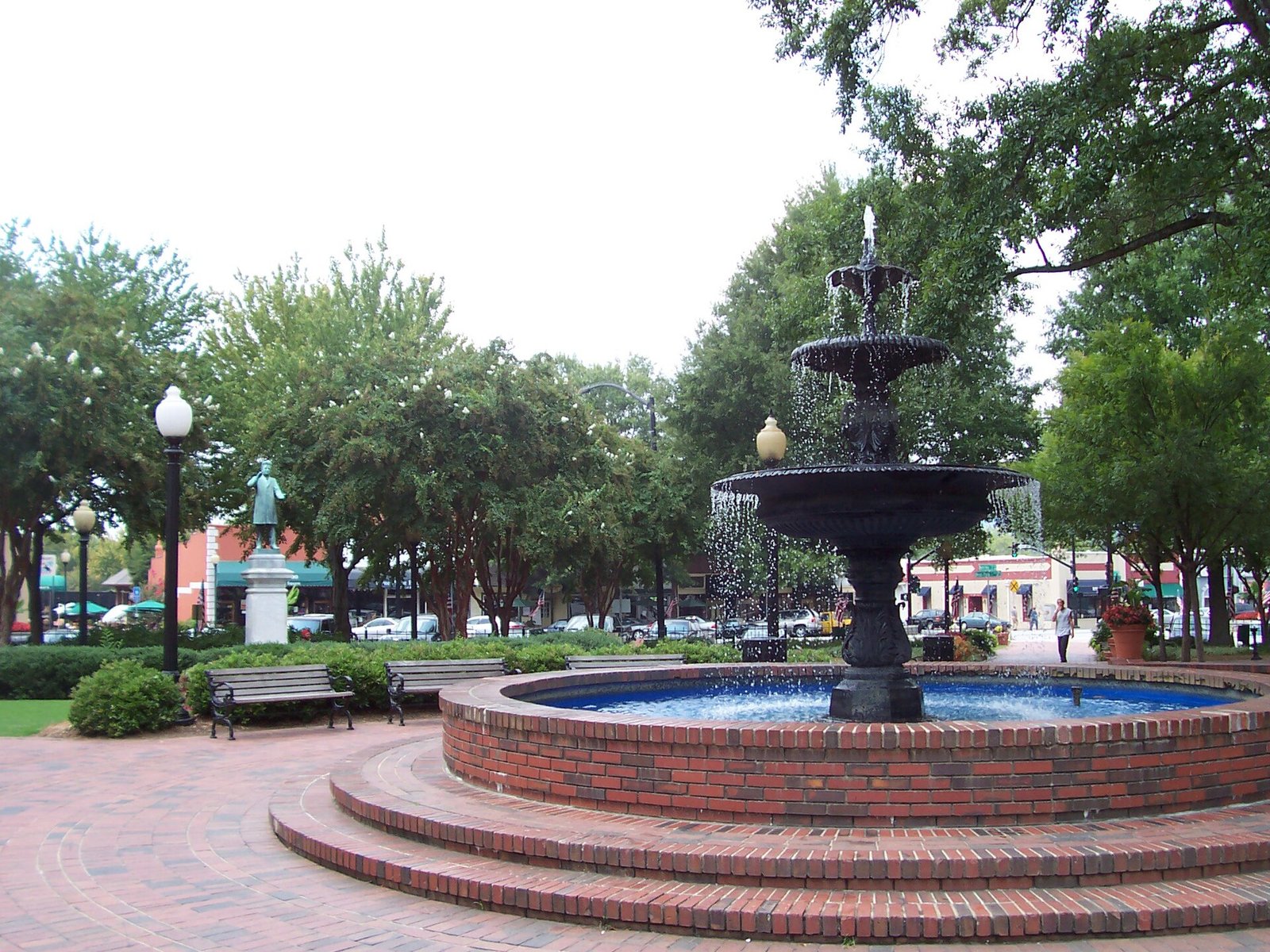
Marietta is an independent city with its own charter school district, Marietta City Schools, while unincorporated East Cobb next door is zoned to the countywide Cobb County School District — both sit in Cobb County, but “East Cobb schools” and “Marietta schools” mean different systems. Marietta city’s Census figures: population 63,574, median home value $448,500, median household income $72,725 (Census ACS 2020-2024) — a citywide figure that includes lower-income neighborhoods, so it understates prices near the historic Square. East Cobb has no separate Census place and generally commands higher home prices, since it’s zoned to several of Cobb’s higher-profile high schools. Commute from either area runs about 20 miles and 30-40 minutes via I-75. Neither has MARTA access; Cobb County sits entirely outside MARTA’s service area. Marietta Square’s historic downtown and the Battery Atlanta/Truist Park entertainment district (unincorporated Cobb) are the area’s best-known landmarks. It suits buyers who want a walkable historic downtown (Marietta proper) or larger lots zoned to specific Cobb high schools (East Cobb).
Smyrna: A Shorter Commute at a Cobb County Price
Smyrna offers one of the shortest drive commutes outside the MARTA service area — about 12 miles, 20-25 minutes via I-75/I-285 — at a median home value roughly $170,000 below Sandy Springs’ comparable commute. Population 57,513, median home value $449,500, median household income $100,061 (Census ACS 2020-2024). Zoned to Cobb County School District. Known for its walkable Market Village town center and proximity to the Battery Atlanta/Truist Park entertainment district. No MARTA. Suits buyers who want a close-in commute without North Fulton prices.
Roswell: Historic Square, Fulton County Schools
Roswell pairs a historic downtown square with a shorter commute than North Fulton suburbs further out — about 20 miles, 30-40 minutes to Midtown/Downtown. Population 91,505 (second-largest here), median home value $567,100, median household income $128,654 (Census ACS 2020-2024). Zoned to Fulton County Schools. Known for Roswell Square’s historic district and Chattahoochee River-adjacent parks. No MARTA; the closest station, Sandy Springs, sits roughly 8 miles south. Suits buyers who want historic character at a lower price than Alpharetta or Milton.
Alpharetta: North Fulton’s Retail and Tech Hub
Alpharetta anchors North Fulton’s tech and retail corridor, with a commute of about 25 miles, 35-45 minutes to Midtown/Downtown via GA-400. Population 66,921, median home value $649,000, median household income $147,612 (Census ACS 2020-2024). Zoned to Fulton County Schools. Known for the Avalon and Alpharetta City Center mixed-use developments and a concentration of tech-sector employers. No MARTA; North Springs, the Red Line’s northern terminus, is about 9 miles south. Suits dual-income families who want new-build retail and can absorb a longer commute.
Duluth: The Lowest Median Home Value on This List
Duluth has the lowest median home value of the 14 suburbs compared here, at $400,800, with a commute of about 25 miles, 35-45 minutes via I-85. Population 33,815, median household income $95,331 (Census ACS 2020-2024). Zoned to Gwinnett County Public Schools. Known for the Gas South Arena/Gas South District entertainment complex and a dense corridor of international dining along Pleasant Hill Road. No MARTA; Gwinnett sits entirely outside MARTA’s service area. Suits value-focused buyers who want the lowest entry price on this list.
Milton: The Highest Price, the Most Space
Milton has both the highest median home value ($789,000) and the highest median household income ($171,295) here, reflecting its large-lot, lower-density zoning. Population 41,266 (Census ACS 2020-2024). Zoned to Fulton County Schools. Commute runs about 30 miles, 45-55 minutes. Known for equestrian-zoned subdivisions and the small historic Crabapple district. No MARTA. Suits buyers prioritizing acreage and income over commute time.
Johns Creek: Fulton’s Northeast Corner
Johns Creek combines a high median household income ($160,093) with a longer commute — about 30 miles, 45-55 minutes to Midtown/Downtown. Population 80,401, median home value $629,400 (Census ACS 2020-2024). Zoned to Fulton County Schools. Known for Technology Park’s office campuses and large master-planned subdivisions built through the 1990s and 2000s. No MARTA; the nearest station is roughly 12 miles away. Suits families prioritizing spacious homes over a short drive.
Suwanee: A Master-Planned Town Center in Gwinnett
Suwanee sits mostly in Gwinnett County (a small section extends into Forsyth County) and is built around a compact, walkable town center — a different pattern than most Gwinnett suburbs. Population 23,034, median home value $480,600, median household income $103,260 (Census ACS 2020-2024). Zoned to Gwinnett County Public Schools. Commute is about 30 miles, 40-50 minutes via I-85. Suwanee Town Center’s park and event lawn anchor city life. No MARTA. Suits families who want a master-planned “downtown” feel below North Fulton prices.
Woodstock: Cherokee County’s Revitalized Downtown
Woodstock has rebuilt its historic downtown along Elm Street into a walkable dining and retail strip, at a median home value ($436,500) well below the North Fulton suburbs here. Population 39,895, median household income $103,496 (Census ACS 2020-2024). Zoned to Cherokee County School District. Commute is about 30 miles, 40-50 minutes via I-575. Also known for the Outlet Shoppes at Atlanta nearby. No MARTA; Cherokee sits entirely outside MARTA’s service area. Suits buyers who want new-build inventory below North Fulton pricing.
Peachtree City: Golf Carts Instead of Sidewalks
Peachtree City is built around more than 100 miles of dedicated golf-cart paths connecting neighborhoods to schools, shopping, and Falcon Field, a layout unlike anywhere else on this list. Population 40,880, median home value $482,500, median household income $113,987 (Census ACS 2020-2024). Zoned to Fayette County Schools. Commute is about 30 miles, 40-50 minutes via I-85. No MARTA, and Fayette County doesn’t currently participate in the regional Xpress network. Suits families who want a self-contained, golf-cart-centric community.
What should you verify about schools and safety?
Georgia assigns students by home address and school zone, not by city name, so the district listed above is a starting point, not a guarantee — confirm the exact zoned elementary, middle, and high school with the relevant county board of education before signing a lease or contract. Georgia’s official School Grades portal publishes A-F letter grades, state assessment results, and graduation rates by school and district. For crime, several suburbs here appear in our safest places to live in Georgia guide with dated, sourced figures: SafeWise’s 2026 ranking (2023 FBI/NIBRS data) recorded Johns Creek’s violent crime rate at 0.3 per 1,000 residents and property crime at 5.5 per 1,000, Milton at 0.9 and 4.7 per 1,000, and Peachtree City at 0.2 and 8.0 per 1,000. We don’t repeat subjective “safest suburb” rankings here; check the full guide and GBI’s crime data directly for any address you’re seriously considering.
| Suburb | Population | Median household income | Known for | Best for |
|---|---|---|---|---|
| Decatur | 25,276 | $139,397 | Walkable historic square inside about 4.2 square miles | Shortest commute plus MARTA, at the highest price per square foot here |
| Sandy Springs | 105,013 | $104,340 | GA-400 corporate corridor and the City Springs civic complex | MARTA access with a large job base outside the city limits |
| Smyrna | 57,513 | $100,061 | Market Village town center near the Battery Atlanta | A close-in commute without North Fulton prices |
| Brookhaven | 59,643 | $117,663 | Oglethorpe University, Town Brookhaven, Blackburn Park | MARTA near Buckhead offices without the Buckhead price tag |
| Dunwoody | 51,792 | $121,903 | Perimeter Mall and the Perimeter Center corporate cluster | MARTA next to one of the metro largest suburban job centers |
| Marietta | 63,574 | $72,725 | Marietta Square historic downtown | A walkable historic downtown, or East Cobb school zoning next door |
| Roswell | 91,505 | $128,654 | Roswell Square historic district and Chattahoochee River parks | Historic character below Alpharetta or Milton prices |
| Alpharetta | 66,921 | $147,612 | Avalon and Alpharetta City Center, plus tech-sector employers | Dual-income families who can absorb a longer commute |
| Duluth | 33,815 | $95,331 | Gas South District and international dining on Pleasant Hill Road | Value-focused buyers wanting the lowest entry price here |
| Milton | 41,266 | $171,295 | Equestrian-zoned subdivisions and the historic Crabapple district | Buyers prioritizing acreage and income over commute time |
| Johns Creek | 80,401 | $160,093 | Technology Park office campuses and master-planned subdivisions | Families prioritizing spacious homes over a short drive |
| Suwanee | 23,034 | $103,260 | Suwanee Town Center park and event lawn | A master-planned downtown feel below North Fulton prices |
| Woodstock | 39,895 | $103,496 | Rebuilt Elm Street downtown; Outlet Shoppes at Atlanta nearby | New-build inventory below North Fulton pricing |
| Peachtree City | 40,880 | $113,987 | More than 100 miles of golf-cart paths and Falcon Field | Families wanting a self-contained, golf-cart-centric community |
How do you choose between these Atlanta suburbs?
- Want the shortest commute and MARTA access: Decatur, Sandy Springs, Brookhaven, or Dunwoody are the only four on this list with rail inside city limits.
- Want the lowest entry price: Duluth ($400,800), Woodstock ($436,500), and Marietta ($448,500) post the lowest median home values in this comparison.
- Want the most space and highest household incomes: Milton and Johns Creek lead on both median home value and median household income, at the cost of a 45-55 minute commute.
- Don’t need MARTA and want a car-optional town center: Suwanee, Woodstock, and Peachtree City are each built around a walkable or golf-cart-connected core.
- Cross-reference school zoning before you commit — district lines don’t always match city limits, especially around Marietta/East Cobb and Suwanee/Forsyth.
- Relocating from out of state? Pair this guide with our Georgia relocation guide (DMV deadlines, taxes, utilities) and our cost of living in Atlanta guide (full monthly budget).
Which suburb fits your situation?
| If you… | Do this | Why |
|---|---|---|
| Work downtown and want the shortest commute | Decatur (~6 mi, 15-20 min) or Smyrna (~12 mi, 20-25 min) | Decatur adds three MARTA stations but posts a $701,400 median home value; Smyrna has no rail at $449,500. Rush hour adds 15-25 minutes to either. |
| Are buying on a tighter budget | Duluth ($400,800), Woodstock ($436,500) or Marietta ($448,500) | The three lowest median home values of the 14 suburbs here in Census ACS 2020-2024 estimates. All three sit outside MARTA’s service area, so price in a car-dependent commute. |
| Want to commute without a car | Decatur, Sandy Springs, Dunwoody or Brookhaven | Only these four have MARTA rail inside city limits. Cobb, Gwinnett, Cherokee and Fayette counties are outside the service area entirely, and no suburb here has an Xpress stop in city limits. |
| Have school-age kids | Confirm the zoned elementary, middle and high school with the county or city board of education before signing anything | Georgia assigns students by address, not city name. Decatur (City Schools of Decatur) and Marietta (Marietta City Schools) run their own systems, and lines blur at Marietta/East Cobb and Suwanee/Forsyth. |
| Want the lowest published crime numbers | Johns Creek, Milton or Peachtree City | SafeWise’s 2026 ranking of 2023 FBI/NIBRS data put Johns Creek at 0.3 violent and 5.5 property crimes per 1,000 residents, Milton at 0.9 and 4.7, and Peachtree City at 0.2 and 8.0. Figures for the other 11 suburbs: Not published here. |
| Want space and can absorb the drive | Milton ($789,000 median home value, $171,295 median household income) or Johns Creek ($629,400 and $160,093) | Both lead the list on price and income, and both sit about 30 miles out at 45-55 minutes with no MARTA rail. |
| Want a walkable center without North Fulton prices | Suwanee ($480,600), Woodstock ($436,500) or Peachtree City ($482,500) | Each is built around a walkable or cart-connected core — Suwanee Town Center, Woodstock’s rebuilt Elm Street, and Peachtree City’s 100-plus miles of golf-cart paths — at 40-50 minutes out. |
FAQ
What is the single best Atlanta suburb to live in?
There isn’t one — it depends on your priority. Decatur has the shortest commute and MARTA access but the highest price per square foot; Milton and Johns Creek offer the most space and highest incomes but the longest drives; Duluth and Woodstock offer the lowest entry prices. Match the suburb to commute, price, or transit rather than a single ranked list.
Which Atlanta suburbs have MARTA access?
Of the 14 suburbs in this guide, only Decatur, Sandy Springs, Dunwoody, and Brookhaven have MARTA rail stations within city limits. MARTA’s rail and bus network operates almost entirely within Fulton, DeKalb, and Clayton counties; Cobb, Gwinnett, Cherokee, and Fayette counties have no MARTA rail or bus service.
What is the most affordable Atlanta suburb on this list?
Duluth has the lowest median home value at $400,800, followed by Woodstock ($436,500) and Marietta ($448,500), all per the Census Bureau’s 2020-2024 ACS 5-year estimates. All three sit outside MARTA’s service area, so factor a car-dependent commute into the lower price.
Do Cobb, Gwinnett, Cherokee, and Fayette counties have MARTA?
No. MARTA’s service area is almost entirely limited to Fulton, DeKalb, and Clayton counties. Residents of Marietta, Smyrna, Duluth, Suwanee, Woodstock, and Peachtree City commute by car; the regional Xpress commuter bus network serves other outlying counties but not a park-and-ride from any of those six cities.
Which Atlanta suburb has the shortest commute to downtown?
Decatur, at about 6 miles and 15-20 minutes to Downtown Atlanta in normal traffic, followed by Sandy Springs, Brookhaven, and Smyrna at roughly 10-12 miles and 20-25 minutes.
How do I check the exact school my address is zoned for?
Contact the relevant county (or city) board of education directly with the specific address — Georgia assigns schools by home address, not city name, and district lines don’t always match city limits. Georgia’s official School Grades portal also lets you look up performance data once you know the specific school.
Is Decatur or Smyrna the better short-commute pick?
Decatur is closer and better connected — about 6 miles and 15-20 minutes to Downtown, with the Decatur, Avondale and East Lake MARTA stations inside city limits — but its median home value is $701,400. Smyrna sits about 12 miles out at 20-25 minutes with no MARTA and a median home value of $449,500. Decatur buys time and transit; Smyrna buys a far lower price.
Is Milton or Johns Creek worth a 45-55 minute commute?
Only if space and household income matter more to you than time. Milton posts the highest median home value here at $789,000 and the highest median household income at $171,295; Johns Creek follows at $629,400 and $160,093. Both sit about 30 miles out with no MARTA rail. If the drive is the deciding factor, Decatur at about 6 miles or Smyrna at about 12 is the better trade.
Which suburb should you pick if you are relocating for a remote job?
With the commute out of the equation, price and town center decide it. Duluth ($400,800), Woodstock ($436,500) and Marietta ($448,500) hold the three lowest median home values here, and Suwanee, Woodstock and Peachtree City are each built around a walkable or golf-cart-connected core rather than a highway interchange.
Where should you look if you want the lowest published crime numbers?
Three of these suburbs have dated figures in this guide: SafeWise’s 2026 ranking of 2023 FBI/NIBRS data recorded Johns Creek at 0.3 violent and 5.5 property crimes per 1,000 residents, Milton at 0.9 and 4.7, and Peachtree City at 0.2 and 8.0. We publish no figures for the other 11 — check GBI crime data for any specific address.
How we checked this guide: Dates, hours, admission and parking prices, and access details were verified against the official sources listed below on . Operators change schedules and raise prices without notice, so confirm anything time-sensitive before you drive. The figures in this guide also feed our Georgia Attraction Transparency Index and Family Day-Out Cost Index.
Sources
- U.S. Census Bureau QuickFacts — 2020-2024 American Community Survey 5-year estimates (all city-level population, home value, rent, and income figures)
- MARTA — official site and system/route information
- Xpress (GRTA) — current commuter bus routes and schedules
- Georgia School Grades portal — official school and district performance data
- SafeWise — “Georgia’s Safest Cities of 2026,” FBI/NIBRS 2023 crime data
- Marietta City Schools — official district site

Hank Whitlock is the pen name of the It's Georgia editor. Every guide is built around the questions a busy family actually asks before a trip: how long is the drive, what does parking cost, can the stroller make it, are dogs allowed. Details are checked against official park, city, and venue sources, and each guide shows the date it was last updated.


