The Jekyll Island Shrimp and Grits Festival is a free, two-day outdoor food and arts festival in Jekyll Island’s Historic District, confirmed for Friday, October 23 and Saturday, October 24, 2026. Admission is free — you only pay Jekyll Island’s regular vehicle parking fee, plus a $5 event surcharge on daily and weekly parking passes.
Expect food vendors, an artists market, live music on multiple stages, and Friday-night fireworks around 7:15 p.m., spread across 32 acres that past years have drawn more than 45,000 people to.
This guide covers the confirmed 2026 dates and pricing, plus what to expect with strollers, dogs, and parking, straight from Jekyll Island’s official event page.
| Question | Answer |
|---|---|
| What does it cost? | Admission is free. You pay Jekyll Island standard parking: $10 per vehicle per day, $15 oversized, plus a $5 festival surcharge on daily and weekly passes. |
| How long should we budget? | Half a day. The grounds cover 32 acres and the festival says walking is the best way to get around. |
| When is it in 2026? | Friday, October 23 from 4 to 9 p.m. and Saturday, October 24 from 10 a.m. to 9 p.m. |
| What is the best time to go? | Friday evening, or Saturday right at the 10 a.m. opening. Saturday afternoon and evening are the busiest. |
| Where do we park? | Near the Historic District after paying at the causeway gate. On-island hotels run direct shuttles, and accessible parking is at the Georgia Sea Turtle Center. |
| Are dogs allowed? | The festival asks attendees to leave pets at home because of crowded pathways. Service animals are the exception. |
| Is it stroller-friendly? | Yes. Paths and lawns are generally flat, though vendor rows get slow at peak hours, so a compact stroller beats a full-size one. |
What should you know before you go?
| Detail | What to expect |
|---|---|
| 2026 dates | Friday, October 23 (4-9 p.m.) and Saturday, October 24 (10 a.m.-9 p.m.) |
| Location | Jekyll Island Historic District (National Historic Landmark District), 32-acre festival footprint |
| Admission | Free — no festival ticket or wristband |
| Parking | Standard $10/vehicle/day island fee, plus a $5 event surcharge on daily/weekly passes (waived for annual passholders) |
| Dogs | Discouraged by the festival (“leave your pets at home”); service animals excepted |
| Georgia Sea Turtle Center | Closed for the festival weekend |
| Weather policy | Rain or shine |
What is the Shrimp and Grits Festival?
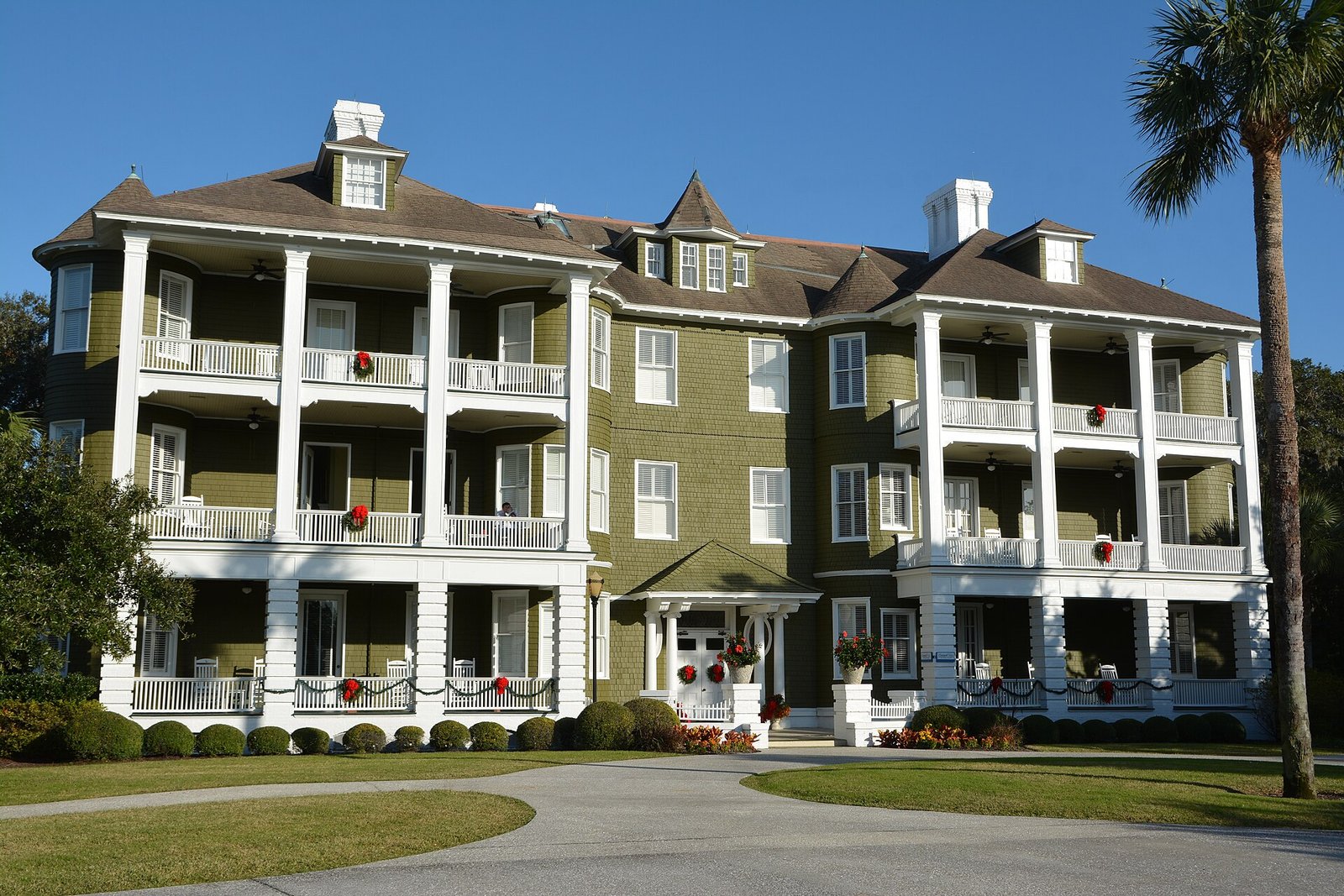
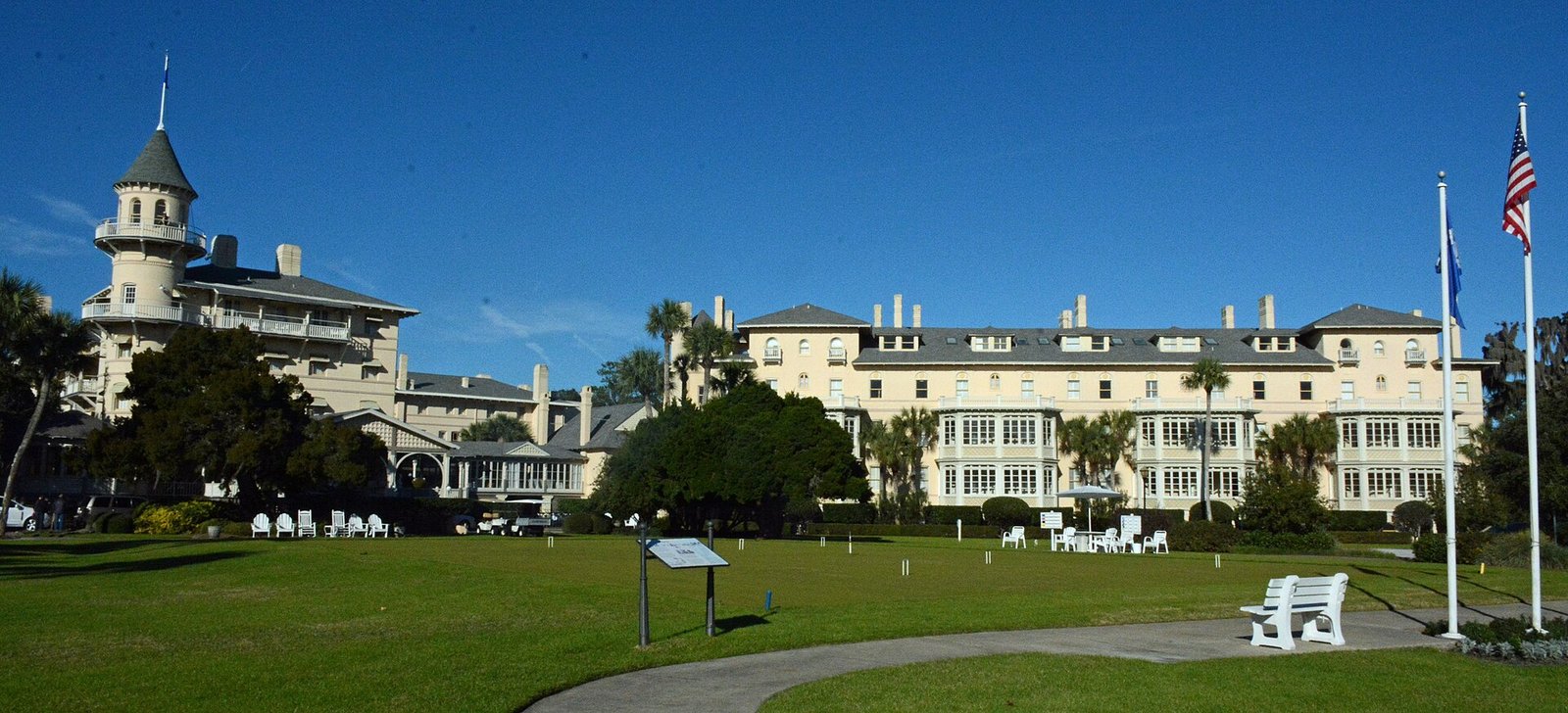
The Shrimp and Grits Festival is a coastal food and arts festival built around Jekyll Island’s Historic District — the cluster of Gilded Age cottages and the Jekyll Island Club that make up the National Historic Landmark District.
It’s not a ticketed sit-down food event; it’s a walk-around festival with vendor booths selling shrimp and grits variations, an artists market, and live music across multiple stages, closing Friday night with fireworks around 7:15 p.m., according to Jekyll Island’s official festival page.
Past editions have drawn more than 45,000 attendees across the weekend over the 32-acre grounds, so plan on walking — the festival’s own guidance says walking is the best way to get around once you’re there. Note: this guide’s assignment brief referenced a chef cooking competition, but the current official festival page does not advertise one for 2026 — see the verification note below.
When is the festival, and what are the hours?
The 2026 festival runs Friday, October 23, from 4 to 9 p.m., and Saturday, October 24, from 10 a.m. to 9 p.m., per Jekyll Island’s official event listing. These are the confirmed dates for the next edition as of this writing.
- Recurring pattern: The festival runs one Friday-Saturday each October in the Historic District. Future-year dates aren’t announced yet — check jekyllisland.com’s festival page for the next edition as the date approaches.
- Fireworks: Friday night, around 7:15 p.m.
What does it cost to get in?
Getting into the festival itself is free — there’s no ticket, no wristband, and no gate to the festival grounds. The only fee you’ll pay is Jekyll Island’s standard causeway parking fee, which applies to every visitor driving onto the island, festival or not.
- Standard daily parking: $10 per vehicle per day (up to 8 feet), $15 for oversized vehicles, valid until midnight, per Jekyll Island’s parking page.
- Festival surcharge: An additional $5 is added to daily and weekly parking passes during the Shrimp and Grits Festival (also applied during July 4th and Holly Jolly Jekyll). Annual passholders are not charged the surcharge.
- Annual pass: $100/year standard, $150/year oversized — pays for itself if you visit the island a handful of times a year and avoids event surcharges entirely.
- Payment: Purchase online in advance or at the parking gate.
Where do you park, and are there shuttles?
If you’re staying on-island, check with your hotel first — Jekyll Island’s official guidance says on-island hotels run direct shuttles to the festival, which sidesteps parking at the grounds entirely. The festival also runs an accessible shuttle fleet with attendants for guests who need it, and shuttles from area airports drop off at the Mosaic Jekyll Island Museum.
If you’re driving in for the day from off-island, you’ll pay the standard parking fee (plus the $5 event surcharge) at the causeway gate and park near the Historic District. With 32 acres of festival grounds and tens of thousands of attendees expected, budget extra time to park and walk in, especially Saturday afternoon.
- Accessible parking: Dedicated accessible parking is located at the Georgia Sea Turtle Center, close to the festival grounds.
- Restrooms: Facilities are spread across the site, including at the Georgia Sea Turtle Center, the Wharf area, behind Doc’s Snack Shop, the Morgan Center lot, behind Cotton & Copper on Pier Road, and at the Mosaic and airport shuttle stations.
- First aid: A first aid station staffed by Jekyll Island EMTs runs all weekend and doubles as a meeting point if your group gets separated.
| What to compare | Friday, October 23, 2026 | Saturday, October 24, 2026 |
|---|---|---|
| Hours | 4 to 9 p.m. | 10 a.m. to 9 p.m. |
| Crowd level | Shorter day and a lighter crowd | The busiest stretch of the weekend, especially afternoon and evening |
| What is on | Food vendors, artists market, live music, and fireworks around 7:15 p.m. | The full day schedule, including the headline music sets |
| Best time to arrive | At the 4 p.m. start | Right at the 10 a.m. opening |
| Cost | Free admission; $10 daily parking, $15 oversized, plus the $5 event surcharge | Free admission; same parking fee and surcharge |
| With a stroller | Flat paths, and lighter going in the first couple of hours | Flat paths, but slow through vendor rows once the crowd builds |
| Best for | A shorter evening visit, and anyone who wants the fireworks | Families who want the full schedule and can arrive at opening |
Should you go Friday or Saturday?
Go Friday evening for a shorter, less crowded visit, or Saturday morning right at the 10 a.m. opening if you want Saturday’s full schedule with a lighter crowd. Saturday afternoon and evening — especially as fireworks-adjacent Friday-night energy carries into Saturday’s headline music sets — draws the festival’s biggest crowds, so the artists market and food lines get long by early afternoon.
Families with young kids will have an easier time in the first couple of hours after each day’s opening, before the 45,000-plus weekend crowd fully arrives.
Who’s playing?
Music runs on two stages. This is the 2026 schedule as published on the festival’s official live-music page (checked ). The festival notes that performances are subject to change.
Main Stage, in the center of the festival:
- Friday, Oct. 23: Backbeat Blvd. (4–6 p.m.), 14K GOLD Band (6:30–7:15 p.m.), The Tams (7:30–9 p.m.)
- Saturday, Oct. 24: Hot Banana Coffee (10–11:30 a.m.), The Rider Band (11:50 a.m.–1:20 p.m.), The Young Americans (1:40–3:10 p.m.), Idle Hands (3:30–5 p.m.), Squirt Gun (5:30–7 p.m.), Chris Taylor & the Rumor (7:30–9 p.m.)
Skeet House Stage, on the front porch of the historic Skeet House in the Artists Market on Pier Road:
- Friday, Oct. 23: Scott Pallot (4–5:30 p.m.), Andy Johnson (5:45–7:15 p.m.), Blossomin’ Bone (7:30–9 p.m.)
- Saturday, Oct. 24: Eddie Pickett (10–11 a.m.), Michaele Hannemann (11:15 a.m.–12:45 p.m.), Joe King (1–2:30 p.m.), Alex Bevin (2:45–3:45 p.m.), Paul Ivey (4–5:30 p.m.), The Carpetbaggers (5:45–7:15 p.m.), Ted Stuckey (7:30–9 p.m.)
What is it like with kids and strollers?
The festival doesn’t advertise a dedicated kids’ zone on its current official page, so treat this as a food-and-music festival you bring kids to rather than a kid-programmed event. That said, it’s outdoors, spread across a walkable historic district, and family attendance is common at Jekyll Island’s signature events generally.
- Stroller reality: The Historic District’s paths and lawns are generally flat and stroller-manageable, but with 32 acres of grounds and a large weekend crowd, expect slow going through vendor rows at peak hours — a compact, easy-to-maneuver stroller works better than a full-size one.
- Noise: Live music runs on multiple stages simultaneously, and Friday’s fireworks are loud at close range — bring ear protection for toddlers if you’re staying for the 7:15 p.m. show.
- Restrooms: Spread widely enough across the grounds (see Parking and Shuttles above) that you shouldn’t be far from one wherever you are on-site.
- Georgia Sea Turtle Center: Don’t plan around it — it’s closed for the festival weekend, so save that stop for a different Jekyll Island trip.
Dogs
Leave your dog at your hotel or back home for this one. Jekyll Island’s official festival guidance is direct: “We encourage you to leave your pets at home,” citing crowded pathways and the fact that not every attendee is comfortable around dogs. Service animals are the only exception.
This is a real change from Jekyll Island’s usually dog-friendly reputation elsewhere on the island — the restriction is specific to festival weekend crowding, not an island-wide rule.
Want to check the policy at a specific Georgia attraction? See our 303-attraction Georgia dog-policy database.
Where to Stay
Staying on-island puts you within shuttle distance of the festival grounds and skips a second parking-fee decision each day — check with your hotel directly about their shuttle schedule for festival weekend.
If you’re deciding between Jekyll Island and its neighbor for a longer coastal trip, see our Jekyll Island vs. St. Simons Island comparison for how the two islands differ on cost, crowds, and things to do.
If you’re building the festival into a longer coastal Georgia trip, our Georgia coast road trip itinerary covers how to string Jekyll Island together with Savannah, St. Simons, and the rest of the coast. Our coastal Georgia hub and our 3 days in Savannah itinerary cover the rest of that stretch.
What to Skip / Common Mistakes
- Don’t skip the parking fee assuming the free festival admission covers it. Festival entry is free, but Jekyll Island’s causeway parking fee — plus the $5 event surcharge — applies regardless.
- Don’t bring a cooler or outside food and drink. The festival prohibits outside food/drink, large coolers, and a list of other items including tents, large umbrellas, drones, and glass.
- Don’t plan a Sea Turtle Center visit around the festival weekend. It’s closed while the festival runs.
- Don’t bring your dog expecting Jekyll Island’s usual pet-friendly rules to apply. The festival specifically asks attendees to leave pets home.
- Don’t skip comfortable shoes. At 32 acres with tens of thousands of attendees, this is a walking festival, not a park-and-sit one.
What happens if it rains?
The festival runs rain or shine, per its official FAQ. Coastal Georgia in late October typically sees mild days in the 70s Fahrenheit and cooler evenings, with an outside chance of a tropical system still lingering that late in hurricane season — check the National Weather Service Jacksonville/Charleston coastal forecast in the days beforehand rather than assuming clear skies, and dress in layers for the temperature swing between Friday’s afternoon start and the evening fireworks. For other annual Georgia events and when they fall, see our Georgia events calendar.
Which plan fits your trip?
| If you… | Do this | Why |
|---|---|---|
| Only have one evening | Go Friday and arrive at the 4 p.m. start | Friday runs 4 to 9 p.m. and still includes food vendors, the artists market, live music and fireworks around 7:15 p.m. |
| Want the full schedule without the worst crowds | Go Saturday and be there at the 10 a.m. opening | Saturday runs 10 a.m. to 9 p.m. with the headline music sets, but afternoon and evening are the busiest stretch of the weekend |
| Have a toddler or a stroller | Bring a compact stroller and come in the first couple of hours after either day opens | Historic District paths and lawns are flat, but 32 acres and a 45,000-plus weekend crowd make vendor rows slow going |
| Want to keep the cost down | Walk in on free admission and buy parking online in advance, or weigh the annual pass | Entry is free; parking is $10 per vehicle per day, $15 oversized, plus a $5 festival surcharge that annual passholders ($100, or $150 oversized) never pay |
| Are staying on the island | Ask your hotel about its direct festival shuttle | Jekyll Island’s official guidance says on-island hotels run direct shuttles, which skips parking at the grounds entirely |
| Need accessible parking | Head for the Georgia Sea Turtle Center lot | Dedicated accessible parking sits there, close to the grounds, and the festival runs an accessible shuttle fleet with attendants |
| Get rain, or a warm afternoon and cool night | Come anyway and dress in layers | The festival runs rain or shine; late-October coastal Georgia is typically mild in the 70s Fahrenheit by day and cooler by the evening fireworks |
Making a weekend of it? Our Jekyll Island visitor guide covers the parking pass, the beaches, biking and what’s free on the island.
FAQ
How much does the Jekyll Island Shrimp and Grits Festival cost?
Admission to the festival itself is free. The only required cost is Jekyll Island’s standard parking fee — $10 per vehicle per day, $15 for oversized vehicles — plus a $5 event surcharge added to daily and weekly passes during the festival. Annual passholders skip the surcharge.
Do I still have to pay to park on Jekyll Island during the festival?
Yes. Jekyll Island’s causeway parking fee applies to every vehicle entering the island year-round, festival included, and the festival adds a $5 surcharge on top of the standard daily/weekly rate.
Can I bring my dog to the Shrimp and Grits Festival?
The festival asks attendees to leave pets at home, citing crowded pathways, though service animals are still permitted. This is a festival-specific request rather than an island-wide ban — Jekyll Island allows leashed pets in many other areas outside the festival footprint.
Is the Georgia Sea Turtle Center open during the festival?
No. The center closes for the Shrimp and Grits Festival weekend. Plan that visit for a separate trip to Jekyll Island rather than pairing it with the festival.
Is there a chef competition at the Jekyll Island Shrimp and Grits Festival?
The festival’s current official event page does not list a chef or cooking competition for the 2026 edition — its published lineup covers food vendors, an artists market, live music, and fireworks. If a cooking competition returns in a future year, it isn’t confirmed as of this writing, so check the official festival page for the current year’s schedule.
When are the 2027 festival dates announced?
Jekyll Island had not published 2027 dates as of this writing. The event has run one Friday-Saturday weekend each October in recent years, so check the official festival page in the months beforehand for the confirmed next-year dates.
Should we go Friday or Saturday?
Friday if you want a shorter, lighter visit and the fireworks, which go up around 7:15 p.m.; the festival runs 4 to 9 p.m. that day. Saturday runs 10 a.m. to 9 p.m. with the full schedule, but afternoon and evening draw the biggest crowds, so arrive at the 10 a.m. opening if you pick that day.
Is the annual parking pass worth it, or should we just pay daily?
It depends how often you come. Daily parking is $10 per vehicle, or $15 oversized, and the festival adds a $5 surcharge to daily and weekly passes. The annual pass is $100 standard or $150 oversized and is never charged the event surcharge, so it pays for itself if you visit the island a handful of times a year.
Can you get to the festival without driving onto the island?
Yes, if you are staying on-island or arriving by air. Jekyll Island says on-island hotels run direct shuttles to the festival, and area-airport shuttles drop off at the Mosaic Jekyll Island Museum. If you drive in yourself, the causeway parking fee applies to every vehicle year-round: $10 a day, $15 oversized, plus the $5 festival surcharge.
What should you do differently with a toddler or a stroller?
Arrive in the first couple of hours after opening, at 4 p.m. Friday or 10 a.m. Saturday, and bring a compact stroller rather than a full-size one. Paths and lawns in the Historic District are flat, but 32 acres and a 45,000-plus weekend crowd make vendor rows slow. Pack ear protection for the 7:15 p.m. Friday fireworks.
How we checked this guide: Dates, hours, admission and parking prices, and access details were verified against the official sources listed below on . Operators change schedules and raise prices without notice, so confirm anything time-sensitive before you drive. The figures in this guide also feed our Georgia Attraction Transparency Index and Family Day-Out Cost Index.
Sources
- Jekyll Island — Shrimp & Grits Festival (official event page)
- Jekyll Island — Parking
- Georgia Sea Turtle Center — Hours & Admission
- Jekyll Island — Shrimp & Grits Festival live music lineup (official)
Coming up near Jekyll Island
- Kingsland Veterans Day Parade & Ceremony · Kingsland · about 24 mi
- Autumn Encampment 2026 (colonial military reenactment) · Darien · about 21 mi
- Kingsland Catfish Festival · Kingsland · about 24 mi
- Holly Jolly Jekyll · Jekyll Island · 1 mi
Places nearby
- Driftwood BeachBeach · in Jekyll Island
- Georgia Sea Turtle CenterMuseum · in Jekyll Island
- Jekyll Island Club National Historic Landmark DistrictAttraction · in Jekyll Island
- Summer Waves Water ParkAttraction · in Jekyll Island
Straight-line distance from Jekyll Island Historic District, not driving miles. Events within 40 miles, places within 25; “about” means measured from a town centre.
Every Georgia event on the calendar All places to go in Georgia

Hank Whitlock is the pen name of the It's Georgia editor. Every guide is built around the questions a busy family actually asks before a trip: how long is the drive, what does parking cost, can the stroller make it, are dogs allowed. Details are checked against official park, city, and venue sources, and each guide shows the date it was last updated.
More from Events
Cite this page: It's Georgia, “Jekyll Island Shrimp and Grits Festival: Dates, Parking, Tips”, itsgeorgia.com/events/jekyll-island-shrimp-and-grits-festival/ (updated ). Free to quote with attribution and a link to this page.