Short answer
Choose the Georgia mountains for fall color, cabins and a trip built around one signature activity — a gold-mine tour, a scenic railway, Oktoberfest or apple picking; choose the Georgia coast for historic squares, barrier-island beaches and warm water into early fall. The drive is the other real difference: even the closest coastal hub, Savannah, is a longer real-world drive than the farthest North Georgia mountain town.
Georgia mountains vs Georgia coast, at a glance
This isn’t a single town against another — it’s Blue Ridge, Helen, Dahlonega and Ellijay as a group against Savannah, Tybee Island and Jekyll Island as a group. Every figure below is a range pulled from each hub’s own sourced data block, not a single average invented for “the mountains” or “the coast.”
| Georgia mountains | Georgia coast | |
|---|---|---|
| Drive from Atlanta | 65.6–92.6 mi, about 1h 24m–1h 52m free-flow (closely matches real-world time on these routes) | About 3h 45m–5h 15m in real driving (free-flow routing runs 45–55 min long on these interstate routes, so we use real-world time here) |
| Typical paid-attraction cost | $0 (squares, trails) to about $25/adult — Dahlonega mines $19.95–$24.95, Helen tubing $14–$16, Ellijay orchards $12.75–$22.75; Blue Ridge’s railway doesn’t publish fares | Mostly free (squares, parks, cemeteries, shuttle, ferry); paid sites run $10–$30/adult |
| Parking | Free downtown in Dahlonega and Helen; Blue Ridge is free street parking plus a $5–$10 paid lot; Ellijay has no single confirmed policy | Savannah is mostly free (metered, free Sundays); Jekyll is a flat $10/car/day covering every beach; Tybee is the priciest at $4/hr or $25/day |
| Dogs | Leashed dogs generally welcome outdoors (squares, trails, tubing runs, some orchards); excluded from both Dahlonega gold mines, the Blue Ridge train, Mercier Orchard and the Apple Festival; Blue Ridge’s downtown policy could not be confirmed | Leashed OK in Savannah’s squares, at Bonaventure, Fort Pulaski and on the ferry, and on most Jekyll beaches (not Glory or South Dunes); Tybee bans dogs from its beach entirely, $300 fine |
| Strollers | Fine on the main streets in all four towns; not on Consolidated Mine’s underground tour, and Anna Ruby Falls’ paved trail is steep enough to go at your own risk | Jekyll’s paved bike-path network is the easiest of the three; Savannah’s ferry takes strollers but the Owens-Thomas House has no elevator; Tybee’s lighthouse is 178 steps with no elevator |
| Best months | Late October into the first week of November for fall color at all four towns (elevations 1,288–1,765 ft put them in the same band) | No real color season — coastal elevations of 5–46 ft sit in the state’s latest, thinnest color band (Nov 1–15); April and October are the most comfortable months statewide by NOAA normals |
| Ideal length | A day trip (Dahlonega, Ellijay) to an overnight or weekend (Blue Ridge, Helen) | Half a day (Tybee, as a Savannah add-on) to one–three days (Savannah) to a full day or weekend (Jekyll) |
| Best for | Fall color, cabins, gold-mining history, wine tasting, Oktoberfest, apple picking, river tubing | Historic architecture and walkable squares, barrier-island beaches, warm water into early fall |
The short answer
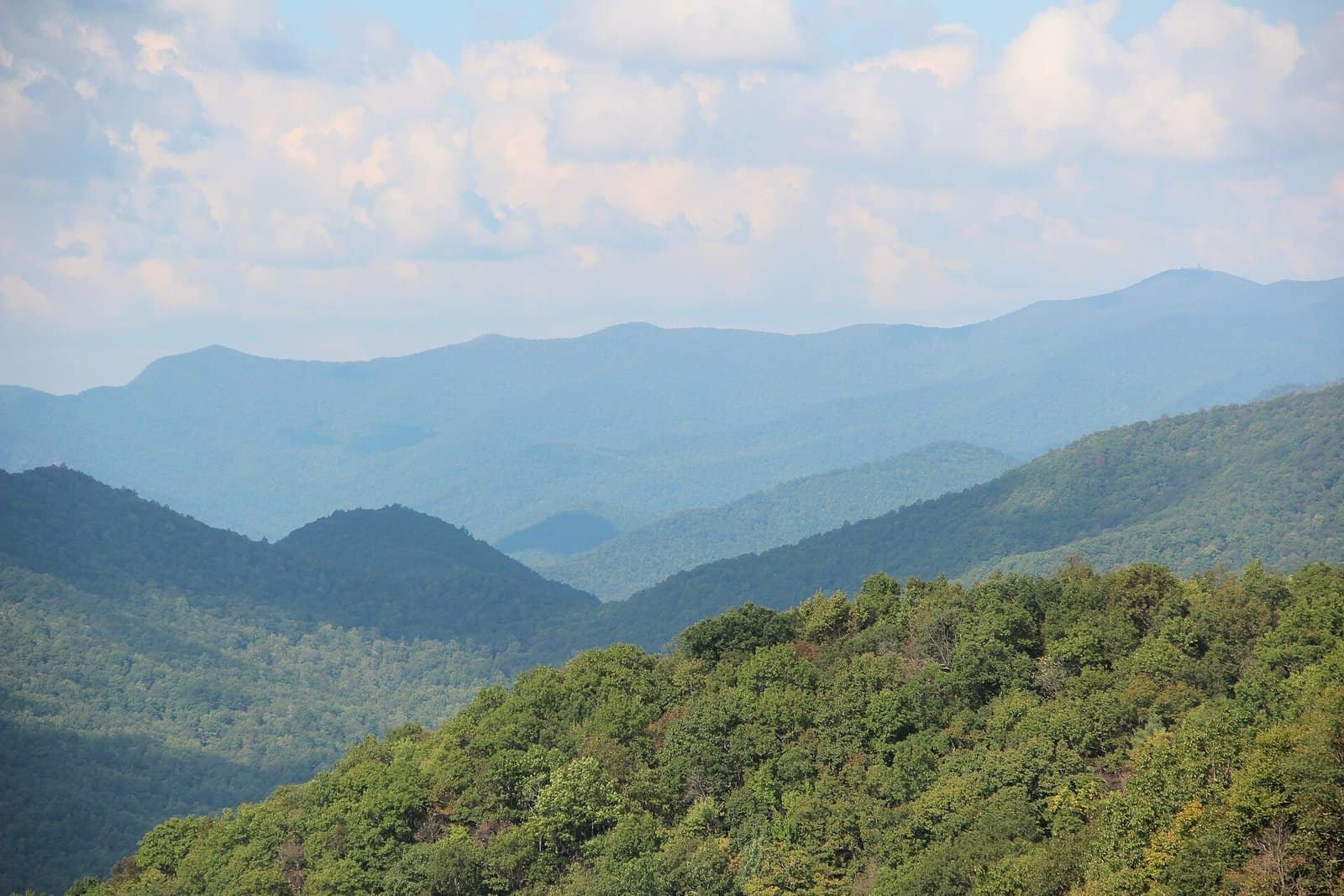
The mountains are the closer, cheaper, cooler-weather trip: every North Georgia hub here is within two hours of Atlanta, downtown parking is free or nearly free in three of the four towns, and the whole region peaks for fall color in the same three-week window.
The coast is the longer, warmer, pricier-to-reach trip — Savannah alone runs 3h 45m to 4 hours in real driving, and Jekyll Island is over five hours — but it delivers what no mountain town does: barrier-island beaches, warm water into early fall, and Savannah’s squares, which are free to walk and unlike anything in North Georgia.
If a fall-color weekend is the goal, go to the mountains; if a beach trip with a historic-city stop is the goal, go to the coast and budget the extra drive time and a few more dollars for attractions and parking.
Questions
Are the Georgia mountains or the Georgia coast closer to Atlanta?
The mountains, by a wide margin. The closest mountain town, Dahlonega, is 65.6 miles and about 1h 24m from Atlanta; the closest coastal hub, Savannah, is about 250 miles and runs 3h 45m to 4 hours in real driving — longer than the drive to the farthest mountain town in this comparison, Blue Ridge (92.6 miles, 1h 50m). (Georgia drive times, OSRM routing collected 17 September 2026, with a direct spot-check against real-world driving on the Savannah, Tybee and Jekyll routes.)
Which is better for fall color, North Georgia or the coast?
The mountains, decisively. Blue Ridge, Helen, Dahlonega and Ellijay all sit between 1,288 and 1,765 feet and peak in the same late-October-to-early-November window. Savannah, Tybee and Jekyll sit at 5–46 feet, in the state’s latest and thinnest color band (Nov 1–15), which our own data page describes as “later, thinner and more scattered than in the mountains.” (Georgia fall foliage timing, USGS elevation data, updated 23 September 2026.)
Is a mountain trip or a beach trip cheaper?
Neither region publishes one all-in number, but the paid attractions run similar ranges — mostly under $25/adult in the mountains (Dahlonega’s mine tours are $19.95–$24.95, Helen tubing is $14–$16) and $10–$30/adult on the coast, where much of Savannah’s core experience is free.
Parking is where they diverge most: Dahlonega and Helen are free downtown, while Tybee is the most expensive parking of either region at $4/hr or $25/day. (Individual hub pages, checked 17–22 September 2026; Georgia beach parking and dog rules, checked 17 September 2026.)
Are dogs easier to bring to the mountains or the coast?
Both allow leashed dogs in most outdoor public spaces, but each has at least one hard no. Tybee Island bans dogs from its beach entirely, year-round, with a $300 fine. Jekyll Island allows leashed dogs on most beaches but not Glory or South Dunes.
In the mountains, dogs aren’t allowed in either Dahlonega gold mine or on the Blue Ridge Scenic Railway, and Blue Ridge’s downtown leash policy could not be confirmed from the city’s own site. (Individual hub pages, checked 17–22 September 2026.)
What time of year should I avoid a Georgia coast trip?
Hurricane season, June 1 through November 30 per NOAA’s National Hurricane Center — a coast-only risk window with no mountain equivalent. It doesn’t rule those months out, but it’s worth checking storm tracking before booking a coastal trip in a way a mountain trip never requires. (Georgia weather by month, NOAA U.S. Climate Normals 1991–2020, checked 21 September 2026.)
Is the mountain weather actually cooler than the coast?
Yes, by a wide margin in summer. Helen’s NOAA-normal average high runs from 49°F in January to 86°F in July; Savannah’s runs from 61°F to 92°F over the same months.
Helen is also the wettest of the 13 Georgia stations NOAA tracks on this site, at 72.7 inches of rain a year spread through the seasons, versus the coast’s rain concentrated in summer and early fall. (Georgia weather by month, NOAA Climate Normals 1991–2020, checked 21 September 2026.)
Guides
- North Georgia mountains: Blue Ridge · Helen · Dahlonega · Ellijay · Which North Georgia mountain town should I visit?
- Coastal Georgia: Savannah · Tybee Island · Jekyll Island
- Data: Georgia drive times · Fall foliage timing by elevation · Georgia weather by month · Georgia beach parking and dog rules · Every Georgia state park, compared

Hank Whitlock is the pen name of the It's Georgia editor. Every guide is built around the questions a busy family actually asks before a trip: how long is the drive, what does parking cost, can the stroller make it, are dogs allowed. Details are checked against official park, city, and venue sources, and each guide shows the date it was last updated.
More from Destinations

Cite this page: It's Georgia, “Georgia Mountains vs Georgia Coast: Which Trip Fits You?”, itsgeorgia.com/destinations/georgia-mountains-vs-coast/ (updated ). Free to quote with attribution and a link to this page.