The Georgia National Fair runs October 8-18, 2026 at the Georgia National Fairgrounds & Agricenter in Perry, with gates open 10 a.m. to 9 p.m. every day and advance adult admission at $15. It’s the state’s official fair — 11 days of midway rides, a full livestock show, name-brand concerts, and fair food, spread across a Middle Georgia fairgrounds built for exactly this. This guide covers what’s actually confirmed for 2026 straight from the fair’s own site and Perry’s tourism office: gate admission versus the Mega Pass ride wristband (they are not the same ticket), free parking, stroller and wagon rental, and how to plan a visit around nap schedules and a not-small drive from Atlanta.
Perry sits about 105 miles south of Atlanta, roughly 1 hour 45 minutes via I-75 South in normal traffic — closer to 2 hours plus on a fair Saturday when I-75 backs up near the Perry exits. The fairgrounds are directly off Exit 135, so the drive is almost entirely interstate. If you’re weighing this against a closer fall festival, see our guides to the Georgia Apple Festival in Ellijay and the Stone Mountain Pumpkin Festival, both under an hour and a half from Atlanta.
| Question | Answer |
|---|---|
| What does it cost? | Advance online (Sept. 8-Oct. 7): $15 adult (ages 11-59), $5 child (3-10), free 2 and under. At the gate, card payment is $15 and cash is $20 — bring a card or buy ahead. |
| When is it? | October 8-18, 2026. Gates open 10 a.m. and close 9 p.m. every day, including both weekends. |
| Is parking free? | Yes. Free parking at the North, East, and West gates, including designated handicap spaces at all three. |
| What about rides? | Gate admission does not include rides. The Mega Pass ride wristband is $41 but is blacked out on Saturdays and the first Sunday, October 11 — it only works Oct. 8-9, 12-16, and 18. |
| How long should we budget? | A half day (4-5 hours) covers the midway, a livestock barn, and a meal; a full day if you’re catching a grandstand concert too. |
| Can we bring a stroller or rent one? | Bring your own, or rent on-site: $16.05/day for a single stroller, $21.40/day for a double stroller or a wagon, through a third-party vendor at the North, West, and East gates. Reserve ahead at 888-441-7575. |
| Are dogs allowed? | No. Pets aren’t permitted during the fair itself; service animals meeting ADA requirements are the exception. |
What is the Georgia National Fair, exactly?
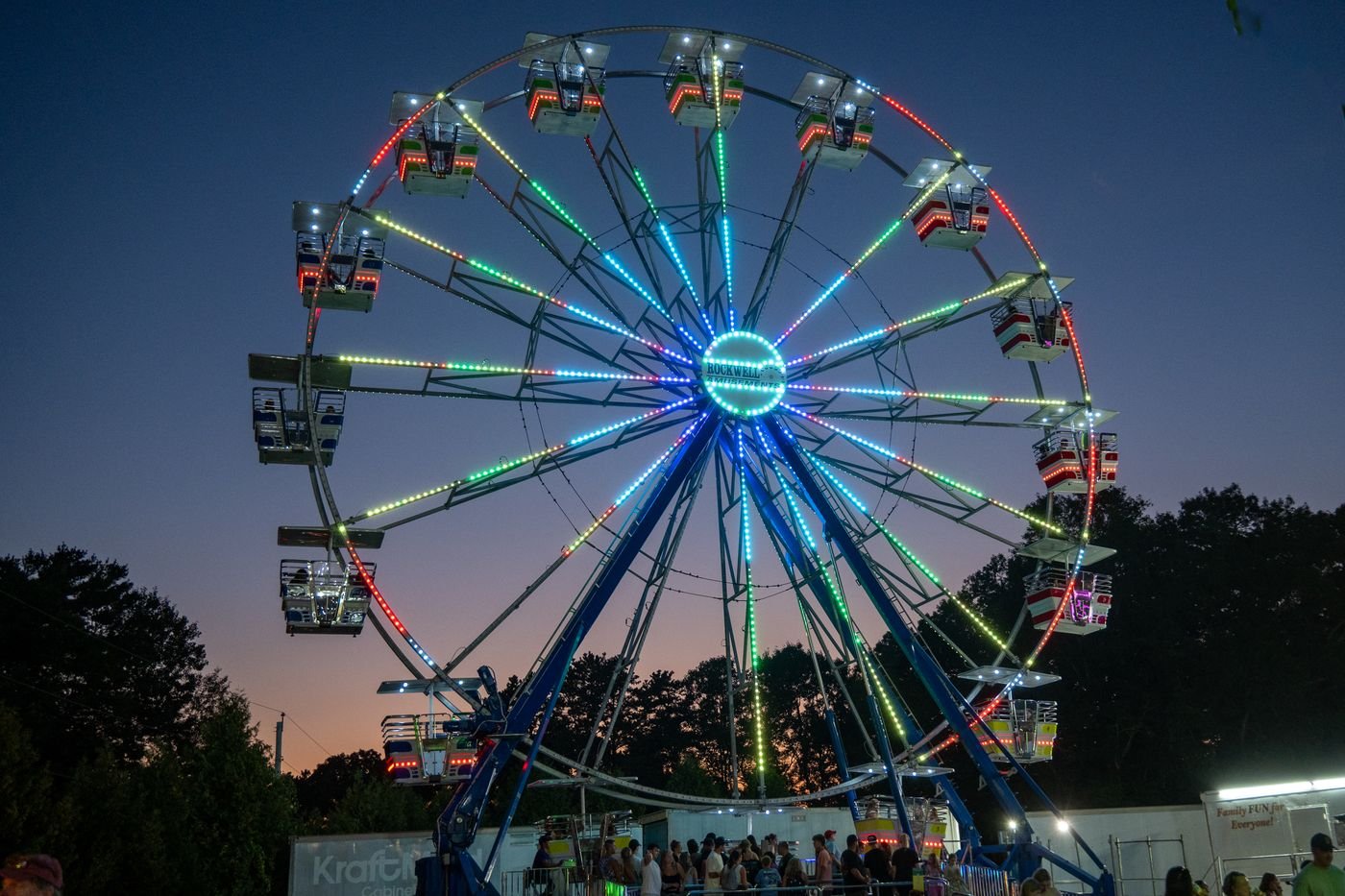
The Georgia National Fair is the state’s official fair, held every October at the Georgia National Fairgrounds & Agricenter — a permanent, 1,000-acre fairgrounds built specifically for it in Perry, about halfway between Atlanta and Valdosta. Unlike a pop-up festival on a town square, it’s a full state-fair build: a midway with dozens of rides, a livestock show and rodeo, agricultural exhibits and competitions, a grandstand concert series, commercial and craft vendors, and fair food from funnel cakes to fried everything else. 2026 is the fair’s 37th year. It runs 11 straight days, always spanning two full weekends in early-to-mid October.
Dates, hours, and how the admission tiers actually work
The Georgia National Fair’s own site confirms October 8-18, 2026, with gates open 10 a.m. to 9 p.m. every single day of the run — there’s no early-close weekday like some smaller fairs use. Two different pieces of official information don’t perfectly line up on price, so here’s both, sourced separately: the fair’s ticketing page lists advance online pricing of $15 for adults (ages 11-59) and $5 for children ages 3-10, available for purchase online from September 8 through October 7, with a 2-Day Pass at $27 and a Season Pass at $97. Perry’s visitor information separately states at-the-gate pricing of $15 by card and $20 cash for adults. Read together, the practical takeaway is: buy online ahead of time or pay by card at the gate, and budget an extra $5 per adult if you’re paying cash on the spot.
Children 2 and under get in free at every tier. The fair’s site did not publish a specific senior discount for 2026 at the time of writing, so if that matters for your group, confirm at georgianationalfair.com or call the fair office before you drive down — we’d rather say we don’t know than guess a number.
The Mega Pass: separate ticket, separate rules
Gate admission gets you into the fairgrounds — the exhibits, the livestock barns, the shopping, the free entertainment stages. It does not get you onto the midway rides. For that, the fair sells a Mega Pass ride wristband for $41, and this is the detail worth writing down before you go: the Mega Pass is blacked out on Saturdays and on the first Sunday, October 11. It’s valid only on October 8, 9, 12, 13, 14, 15, 16, and 18 — in effect, the weekday stretch plus the final Sunday. If your only free day to go is a Saturday, budget for pay-per-ride tickets instead of the wristband, since the all-day pass won’t apply.
Parking, strollers, and getting around
Parking is free at all three public entrances — North, East, and West gates — with handicap-accessible spaces at each. That’s a real difference from most large fairs and festivals in Georgia, where a $10-$25 parking fee is standard; budget that savings toward ride tickets or fair food instead.
The fairgrounds cover a lot of ground — 1,000 acres total, though the fair footprint itself is a fraction of that — so a stroller is worth having for toddlers and preschoolers who won’t want to walk the whole midway-to-livestock-barn distance twice. If you don’t want to bring your own, a third-party vendor rents single strollers ($16.05/day), double strollers ($21.40/day), and wagons ($21.40/day) at the North, West, and East gates; call 888-441-7575 ahead of a Saturday visit since rental stock can run out on the busiest days.
What’s actually there: livestock, rides, food, and concerts
The Georgia National Fair is built around Georgia’s agricultural fair tradition, so the livestock show is the backbone of the event — cattle, swine, goats, rabbits, poultry, and horse shows run throughout the 11 days, most of them free to watch with gate admission. Kids who’ve never been near a farm animal get an unusually close look, and 4-H and FFA exhibitors are typically happy to answer questions between judging rounds. Pair that with the midway (rides, games, and classic fair food), agricultural and creative-arts exhibit halls, a shopping and commercial building, and a nightly grandstand concert series that’s historically included country and contemporary acts (check the fair’s site for the 2026 concert lineup and whether grandstand shows require a separate ticket, since that varies year to year and wasn’t confirmed at the time of writing).
Is it a good fit for young kids?
Mostly yes, with caveats. The livestock barns, exhibit halls, and free entertainment are easy for toddlers and preschoolers — air-conditioned or shaded, low sensory intensity, and self-paced. The midway is the part to plan around: it’s loud, crowded on weekends, and most thrill rides carry height minimums, so a Mega Pass bought for a 4-year-old may go mostly unused. A weekday visit (which is also the only window the Mega Pass covers) is calmer for nap-schedule toddlers than a Saturday, when the fair draws its heaviest crowds. Pack sunscreen and a change of shoes — most of the fairgrounds are outdoors and can get dusty or muddy depending on weather.
When is the best time to go?
Weekday mornings and early afternoons are the lightest crowds, and they’re also the only days the Mega Pass wristband works, which makes a Tuesday-through-Thursday visit the best value if riding is the point of the trip. If a weekend is your only option, Sunday afternoons tend to thin out compared to Saturday, though October 11 (the first Sunday) is still blacked out from the Mega Pass. Either weekend day means paying per-ride instead of the flat wristband rate.
Planning the rest of a Perry trip
Perry is a small Middle Georgia city built around the fairgrounds and I-75 traffic, so lodging and chain restaurants cluster near the interstate exits; book ahead for fair weekends, since the 11-day run is the town’s single biggest annual draw. If you’re weighing whether Perry is worth the longer drive versus a fall festival closer to Atlanta, our Fall in Georgia month-by-month guide lays out what’s happening across the whole state through the season, and our Family Day-Out Cost Index compares what a day at events like this actually costs a family of four once tickets, parking, food, and rides are all added up.
A bit of history
The Georgia National Fair has run every October in Perry since 1990, when the state built the Georgia National Fairgrounds & Agricenter specifically to host it — a deliberate move away from the traveling-carnival model toward a permanent, purpose-built site. That’s part of why the grounds feel more like a small campus than a pop-up fairground: paved walkways between buildings, permanent livestock barns, a fixed grandstand arena, and enough acreage that the fair doesn’t need to shrink its footprint from year to year. 2026 marks the fair’s 37th year. It’s officially recognized as Georgia’s state fair, which is also why it runs longer than almost any other fall event in the state — 11 days against a typical festival’s one long weekend.
What to see beyond the midway
If you only do the rides and leave, you’re skipping most of what makes this different from a county fair or a mall parking-lot carnival. The livestock complex runs continuous breed shows across the 11 days — cattle, swine, sheep, goats, rabbits, poultry, and equine events rotate through, most run by 4-H and FFA youth exhibitors from across the state, and all included with gate admission. The agricultural and creative-arts exhibit halls hold judged competitions in everything from canned preserves and quilting to photography and school art, which tends to be an easy, air-conditioned stop for a tired toddler mid-afternoon. There’s also a commercial exhibit building for shopping, and free entertainment stages scattered around the grounds that don’t require a Mega Pass or extra ticket. Fair food is what you’d expect from a state fair — funnel cakes, corn dogs, fried specialties, turkey legs, and lemonade stands — priced per item at each vendor rather than bundled into admission.
Weather, what to wear, and what to bring
Early-to-mid October in Middle Georgia typically runs warm during the day (highs commonly in the 70s-80s°F) and can turn noticeably cool after sunset, so layering matters more than it would for a summer fair — a light jacket for the evening hours is worth packing even if the afternoon feels warm. Most of the fairgrounds are outdoors and unshaded between buildings, so sunscreen and a hat are worth it for a midday visit, and closed-toe shoes make more sense than sandals once you’re walking through livestock barns or a rained-on midway. Cash still matters at a fair this size — some smaller vendors and game booths may not take cards — so budget an ATM stop or bring cash for incidentals even though gate tickets are sold online and by card.
Accessibility and family logistics
Handicap parking is available at all three public gates (North, East, West), and the grounds’ paved walkways are generally wheelchair- and stroller-friendly between major buildings, though grass and gravel areas near some livestock barns are less smooth going. The fair’s site did not publish specific details on nursing rooms, a lost-child procedure, or re-entry policy at the time of writing — if any of those affect your plans, it’s worth a quick call to the fair office (478-987-3247) before you drive down rather than assuming, since we’d rather flag the gap than guess.
More questions, answered
Do I need to print tickets, or is mobile entry fine? The fair sells advance tickets online through its official ticketing partner; check at checkout whether mobile entry is supported for 2026, since that detail wasn’t specified on the pages checked for this guide.
Is there a shuttle from parking to the gates? Not confirmed either way for 2026 — the fairgrounds are large enough that some visitors may prefer to park closer to their entry gate of choice rather than count on a shuttle.
How does this compare to a smaller fall festival like Dahlonega Gold Rush Days or the Georgia Apple Festival? Those are free, one-weekend street festivals built around vendor browsing; the Georgia National Fair is a ticketed, 11-day state fair built around rides, livestock, and a grandstand concert series. If your family wants rides and animals, Perry is worth the longer drive. If you want a walkable small-town festival, Dahlonega or Ellijay are closer to Atlanta and free to enter.
Dates and prices in this guide are pulled from georgianationalfair.com and Perry’s official visitor information as of mid-September 2026. Ride wristbands, concert tickets, and specific discount days are the details most likely to shift closer to opening day — confirm those directly with the fair before you buy.

Hank Whitlock is the pen name of the It's Georgia editor. Every guide is built around the questions a busy family actually asks before a trip: how long is the drive, what does parking cost, can the stroller make it, are dogs allowed. Details are checked against official park, city, and venue sources, and each guide shows the date it was last updated.